
Email us
Call us
01829 760000

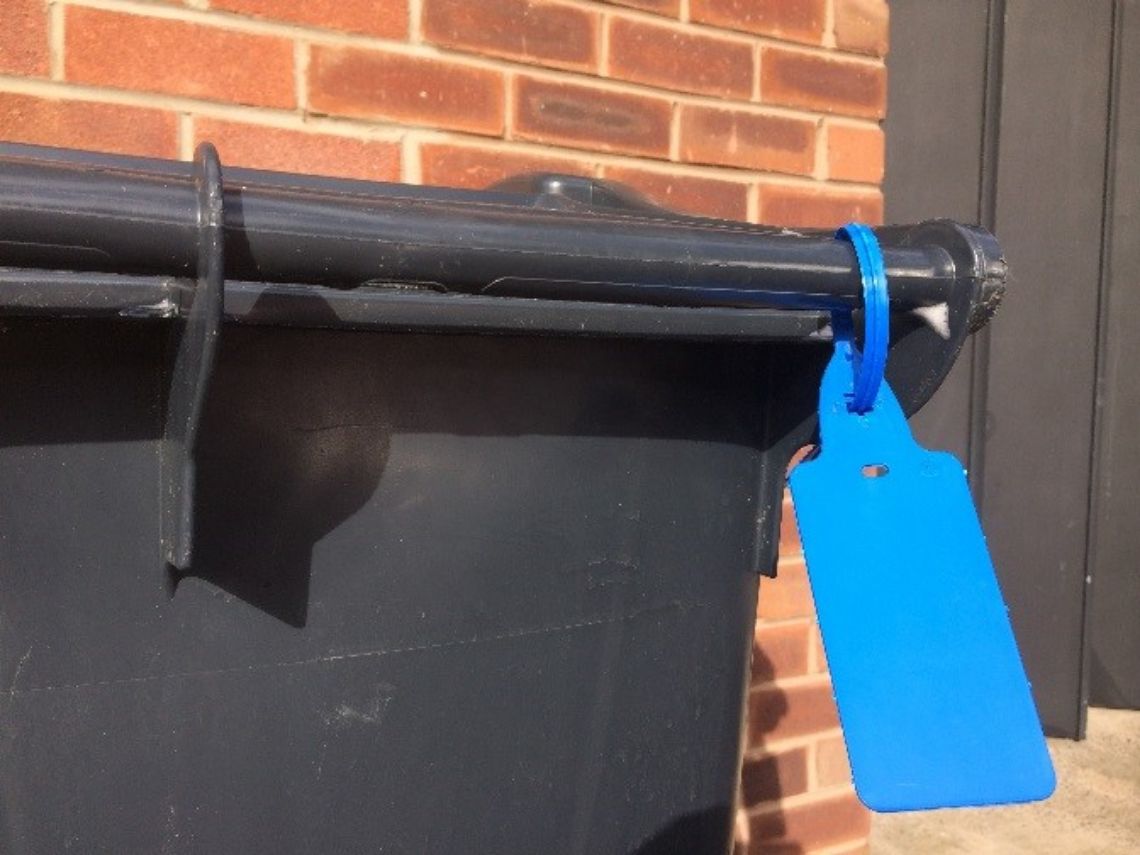
The implementation of effective waste recycling schemes is a major project for local Councils, who are responsible for the collection of most household waste in each of their respective local wards. The collection of garden waste is often an extra service which Councils may provide to their residents, providing an added benefit to residents in exchange for a yearly licence fee.
It therefore becomes an important consideration to appropriately identify users of garden waste collection schemes, so that local waste collection employees can quickly and easily collect recycling containers or wheelie bins covered under respective local schemes.
Universeal believe that the best way to identify waste containers is by way of printed colour-coded tags, which can be easily applied and removed as each year’s scheme begins and ends. The Uniflag big tag seal offers a cost-effective method of identification and tagging. The large 10x5cm flag head and vibrant colours (such as red, yellow, green, blue and white colours) ensure that the tag is clearly visible on all sizes of item, even in poor visibility and light conditions.
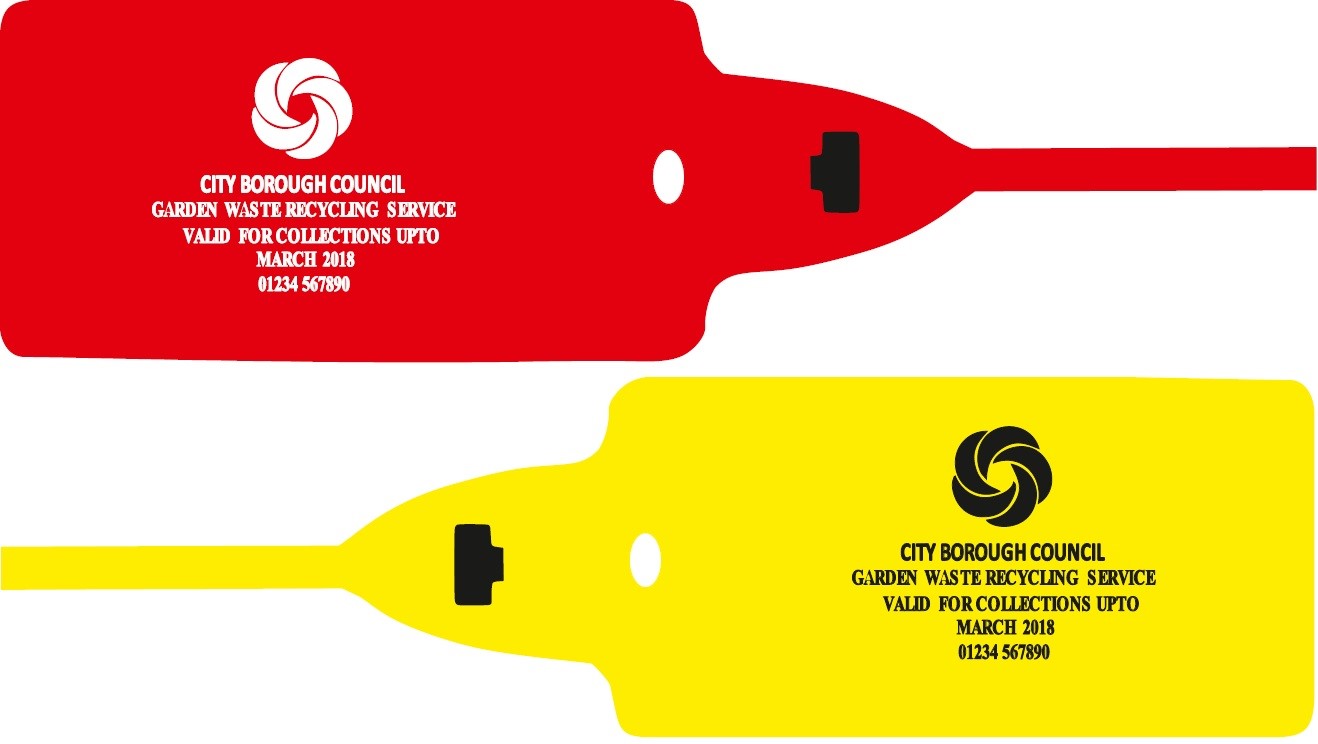
The Uniflag’s robust construction and security features ensure that the tag withstands waste collection environments, and can be customised to suit your local requirements. We are able to print logos, written instructions, dates and telephone numbers on the Uniflag tag, ensuring that important collection scheme information is always attached to the waste container.
The Uniflag is designed and manufactured in our European factory, with quick customisation and colour options. Please give us a call today to discuss your requirements and for a no-obligation sample pack and bespoke quotation.

The accurate identification and traceability of equipment and production batches within industry is as important to the foodstuffs and pharmaceutical industries as any other. Nylon cable ties, polypropylene seals, paper tags and industrial labels and tape are commonplace across manufacturing and processing industries in order to convey information, protect or warn against dangers, carry production data, and for many other purposes.
However, for the foodstuffs and pharmaceutical industry, the risk of contamination caused by such products is also of concern for the associated risk to all of us as consumers. Risks fall into two broad categories: products made from inappropriate materials, or from the risk of such products being destroyed and incorporated into finished product batches.
Unfortunately, products such as plastic ties and tags purchased by buyers for identification purposes may be manufactured from material which is not safe to be in direct contact with foodstuffs ingested by humans. Alternatively, it is possible that such tags may become detached from their fixing, and become shredded or otherwise destroyed by production processes, resulting in potential undetectable fragments which might find their way into finished products, contaminating them.
Both of these threats should be a major concern for the industry as a whole, and are threats which should be protected against. This is reflected in US and EU law which prescribes materials which are approved for use within safety-critical industries (for example, see regulation 2023/2006/EC on good manufacturing practice (GMP) for materials and articles intended to come into contact with food). FDA and EU Food Contact Approval regulations set out the standards which manufactured products coming into contact with foodstuffs must adhere to, including the migration limits.
In order to minimise risks and to achieve compliance with all of the legislation, BRC standards and implemented HACCP systems (Hazard and Critical Control Points), production facilitites should use appropriate industrial tags incorporated into the production process. It is very important that such facilities use tags and ties which are manufactured from food-contact approved material, and which are also metal detectable.
Metal detectability is a key way of tracing possible contaminants: our food-safe products contain a metal additive or metal component, meaning that even small parts can be detected by industrial metal detection systems during production quality control checks. For example, our plain and printed detectable cable ties contain a metal additive dispersed through the entire tie, meaning that even small fragments can be picked up by most conventional detector systems, and appropriate action taken.
Universeal has three main product ranges which will assist you in achieving compliance: detectable cable ties – available plain or printed for identification purposes; detectable loop tags for batch traceability; and detectable ID tags, which can be written on to record all many of important production information.
Detectable and food-safe products are a key protection against the threats described here, and should be considered by all food and pharmaceutical producers as an important avenue to minimise the risk of hazards to human health.
If you have any questions at all on our product range, please give us a call or email us.
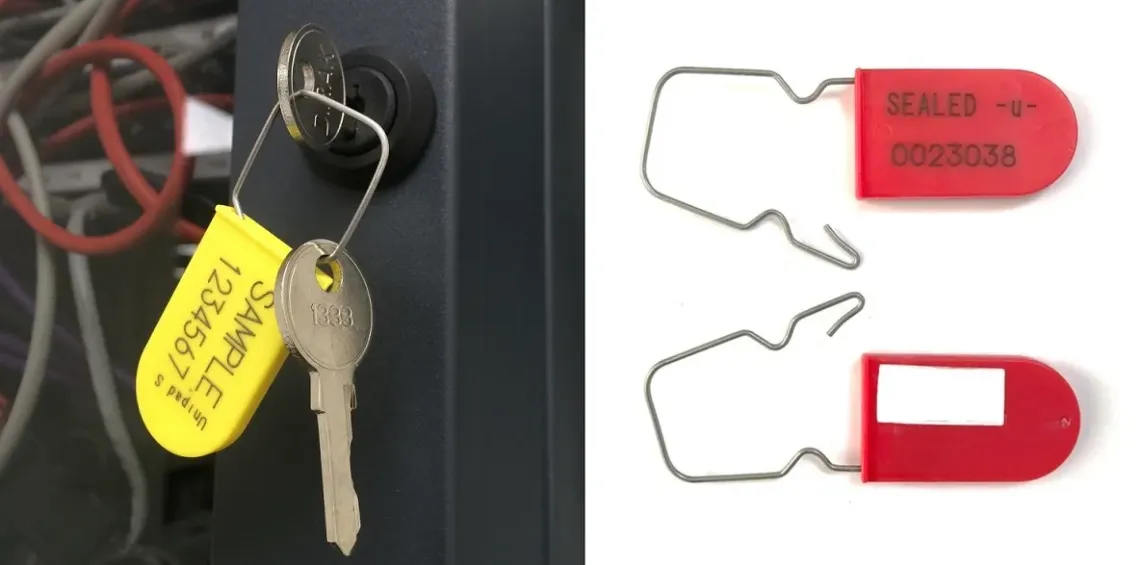
The safe and secure storage, audit and tracking of keys for critical assets such as building doors, cars, and safety deposit boxes is a major operational challenge for any business. It is crucial that keys can be swiftly identified and an audit history be maintained of all keys held, to whom keys have been issued and where keys are currently located.
Our padlock security seals, also known as “key seals” or “security key tags”, provide an ideal solution to securely identify keys. Our key tag models come with a galvanised wire hasp and polypropylene bodies for strong and robust use. They are suitable for car dealerships, car hire depots, lease vehicle companies, security companies, estate agents and many more types of users.
Our padlock seals are pre-printed with unique sequential numbering and a white face for marking with biro or roller-ball pens. They are ideal for use as car key tags for dealerships to record hand-written vehicle registration numbers against each seal’s unique serial number.
Padlock seals can also be used in conjunction with retention pegs in key management panels and boxes, to ensure that keys cannot be removed without users first inputting their own peg – quickly allowing administrators to see visually which user or department has the relevant key. Additionally, we also offer our SealTrack platform, a service available from our website and which can be accessed from any PC or mobile device. The SealTrack platform allows Universeal customers to issue and record information when sealing keys with a unique padlock seal. For example, a car dealership might record the corresponding vehicle reg. number, the user in possession of keys, and any other application-specific information which might be relevant. This software can be tailored to your specific operation, with customised fields and multiple users. For further information, please contact us about our SealTrack Platform.
Give us a ring on 01829 760000 today to discuss your requirement for security seals.

Sending parcels and documents, at home and abroad, is always fraught with risks; once it leaves your sight, who knows really who might attempt to access, steal or otherwise interfere with the consignment you are sending?
Couriered parcels are usually handled by many parties, including multiple handlers at local and regional courier depots; third-party drivers; customs inspectors, airport handlers and more. Each step in the process involves the potential for access, tampering or theft. Such access need not necessarily be illegitimate – for example, customs authorities, as part of the controlled flow of goods, are required on occasion to visually inspect the contents of a consignment to check that they conform to the description noted in export paperwork.
The problem is knowing whether or not your consignment has been handled or damaged – and whether inspections of valuable, fragile or sensitive items need to be carried out to ensure that they have not been compromised.
Without actually being there, how can you do this? One way is to secure your consignment is with tamper-evident security labels or security tape. There are many types of security label or security tape, suited to the particular requirements of the item to be sealed:-
 |
| Residue security labels; designed so that when peeled back they leave a mark or residue on the application surface to which they were applied. |
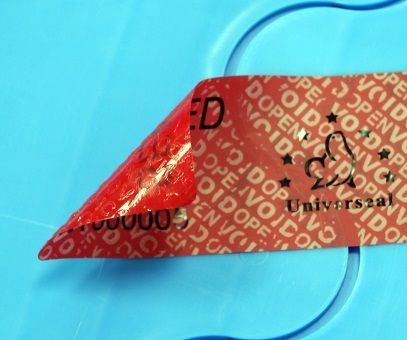 | Non-residue security labels; designed so that when removed they visually deform on the labels surface, leaving the application surface clear. | |
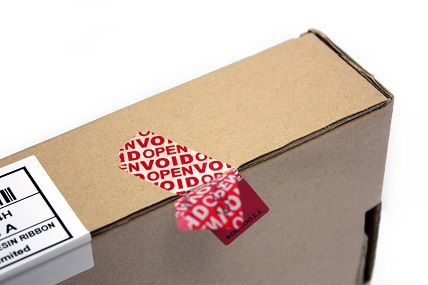
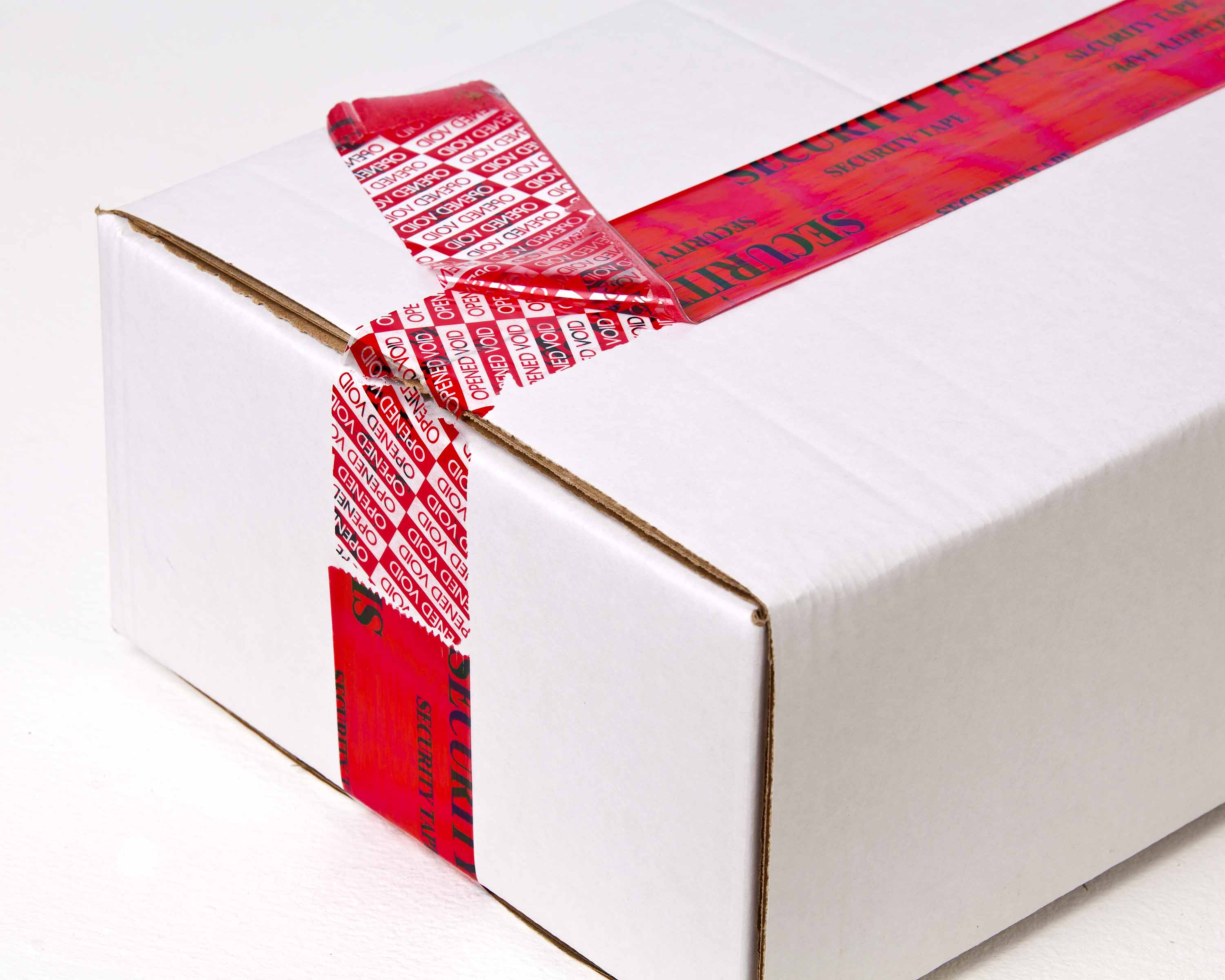 | Residue Security Tape; suitable for sealing cardboard boxes and other containers – it can be used in conjunction with a normal packaging tape dispenser. The tape is marked and leaves a VOID on the sealed packaging upon removal. | |
 | Plain Security Tape; a plain tape which looks visually very similar to traditional brown packaging tape, so as to avoid any unnecessary attention from opportunists. However, once the tape is removed a VOID residue is left upon the box. | |
Such products can be applied to seal and secure any flat surface, such as inner packaging, cartons, mail bags and envelopes, to deter and minimise the risks of opening. Once applied, such labels or tape act as a quick visual reference for the user as to whether or not sealed items have been accessed: once opened, the product physically and permanently changes state with a VOID message appearing on the surface of the product.
This gives control back to the company or individual sending the parcel: for example, using tamper-evident labels will ensure that customs handlers record checks made on consignments, giving you more information on which items have been opened and handled during transit.
Take a cardboard box for example, lacking any sort of locking hasp to accommodate a plastic security seal, security labels can be placed across a carton’s point of access. This ensures that a handler, for example a custom official, is required to peel back or cut the label.
The incorporation of sequential numbering onto security labels also means that they cannot simply be easily replaced to conceal the opening; when the consignment reaches its destination, it is clear if it has been searched because recorded numbers will not match.
—————————————————————————————————————————————————————————————
Of course, security labels aren’t just limited to this sort of application, they can be used in many different ways such as asset identification and to display warranty and servicing information. Some security labels also employ other methods of tamper evidence like the destructible label, which fragments upon removal – meaning that it is impossible to remove and re-instate.
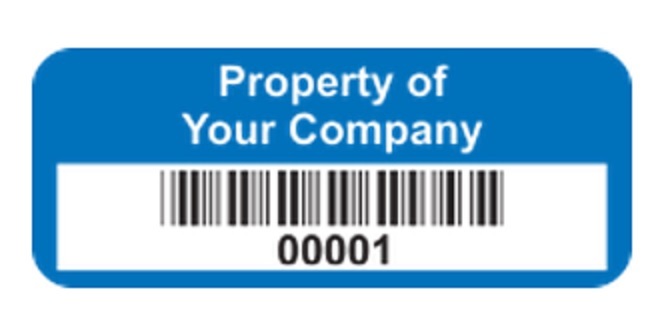 | 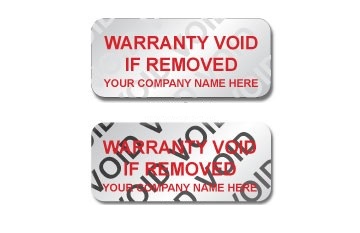 | 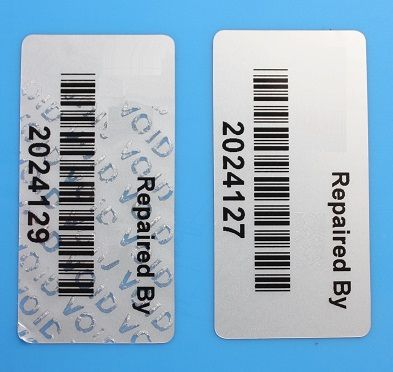 |  |
| Asset Labels | Warranty labels | Vinyl Destructible Labels |
For further information please visit our Security Tapes & Labels area of our website or alternatively you can call us to discuss your requirements.

The standards embodied by the Customs-Trade Partnership Against Terrorism (C-TPAT) and International Organisation for Standardisation 17712 (ISO 17712:2013) define the minimum standards which all container security seals (also known as "barrier seals") involved in cross-border movements must conform to.
The Customs-Trade Partnership Against Terrorism (C-TPAT) program is one layer in U.S Customs and Border Protection’s (CBP) multi-layered cargo enforcement strategy. Through this program, CBP works with the trade community to strengthen international supply chains and improve United States border security.
International Organisation for Standardisation (ISO) is the world’s largest developer of voluntary international standards. The ‘standard’ is a document that provides requirements, specifications, guidelines or characteristics that can be used consistently to ensure that materials, products, processes and services are fit for their purpose, reliable and of good quality.
ISO 17712 establishes “uniform procedures for the classification, acceptance and withdrawal of mechanical freight container seals. It provides a single source of information on mechanical seals which are acceptable for securing freight containers in international commerce.”
The current ISO 17712 standard requires independent confirmation in three areas:
ISO 17712 defines three classes of security seal strength or barrier capacity: “I” for Indicative; “S” for Security; and “H” for High Security. C-TPAT requires the use of “H” class seals. Suppliers must use independent third party test laboratories to validate a seal's classification. Labs must be accredited according to ISO/IEC 17025 (General requirements for the competence of testing and calibration laboratories) to perform testing specific to ISO 17712.
Poor security-related practices can undercut the effectiveness of a high-quality security seal. ISO 17712's Annex A defines over two dozen required practices, such as facility risk assessments and access controls to production and storage areas. Suppliers’ conformance with Annex A should also be demonstrated through an independent certification provider that is accredited to audit compliance with the ISO standards.
Seal manufacturers must be able to demonstrate to, and obtain certification from, an accredited auditor from an independent third party organization that their high security seals have built-in tamper evidence features. If an independent third party organization accredited to ISO 17020 verifies conformity, it will provide the manufacturer with a certificate of compliance that documents that the seals submitted for review do reflect tell-tale evidence of tampering generated by attempts to defeat a correctly closed and affixed seal. Considering that most seals are tampered with in order to introduce illegal contraband or to pilferage a container, this is a welcomed improvement for high security seals –particularly those that are U.S. bound and those affixed to C-TPAT containers and trailers.
It means you should be aware of the credentials of the company from whom you are purchasing security products. You must be able to ensure that you are buying fully compliant security seals from a recommended supplier who can demonstrate compliance with ISO17712 certification requirements. Should you buy a product which is not compliant with ISO 17712, problems like shipping delays are highly likely.
As a buyer you should ask for proof that a potential supplier conforms fully to ISO 17712. Suppliers should be able to provide you with a summary page from the test or audit reports which acts as a certificate of conformity.
If you have any questions please give us a call on 01829 760000 or email [email protected]
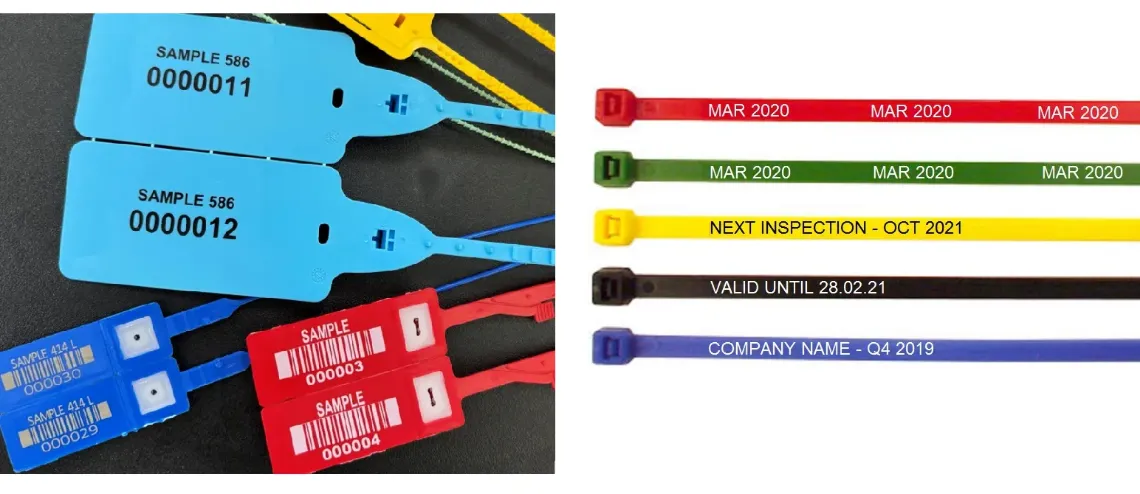
To put it simply, security seals are used in applications in which a tamper-evident solution is required to ensure that the sealed items cannot be accessed without the knowledge of the authorised user. Identification ties, on the other hand, are products designed to fasten around bags, boxes and other items to keep them closed – they are not designed to be tamper-proof, although they can be uniquely printed to identify assets or communicate information to a user.
Security Seals; as the above suggests, are used to secure something: this could be anything from sealing a locking hasp on a door or a first aid kit, to a shipping container or oil drum.
A true security seal is not exactly designed to stop unauthorised access to something but rather to make it extremely difficult to access a sealed enclosure without the seal showing signs of having been tampered. This is achieved by engineering the security seal – and in particular its locking mechanism – in such a way that external manipulation is very difficult once the seal is in situ (without simply breaking the seal). As an example, our Tracewaste seal features an encapsulated locking mechanism to prevent tampering.
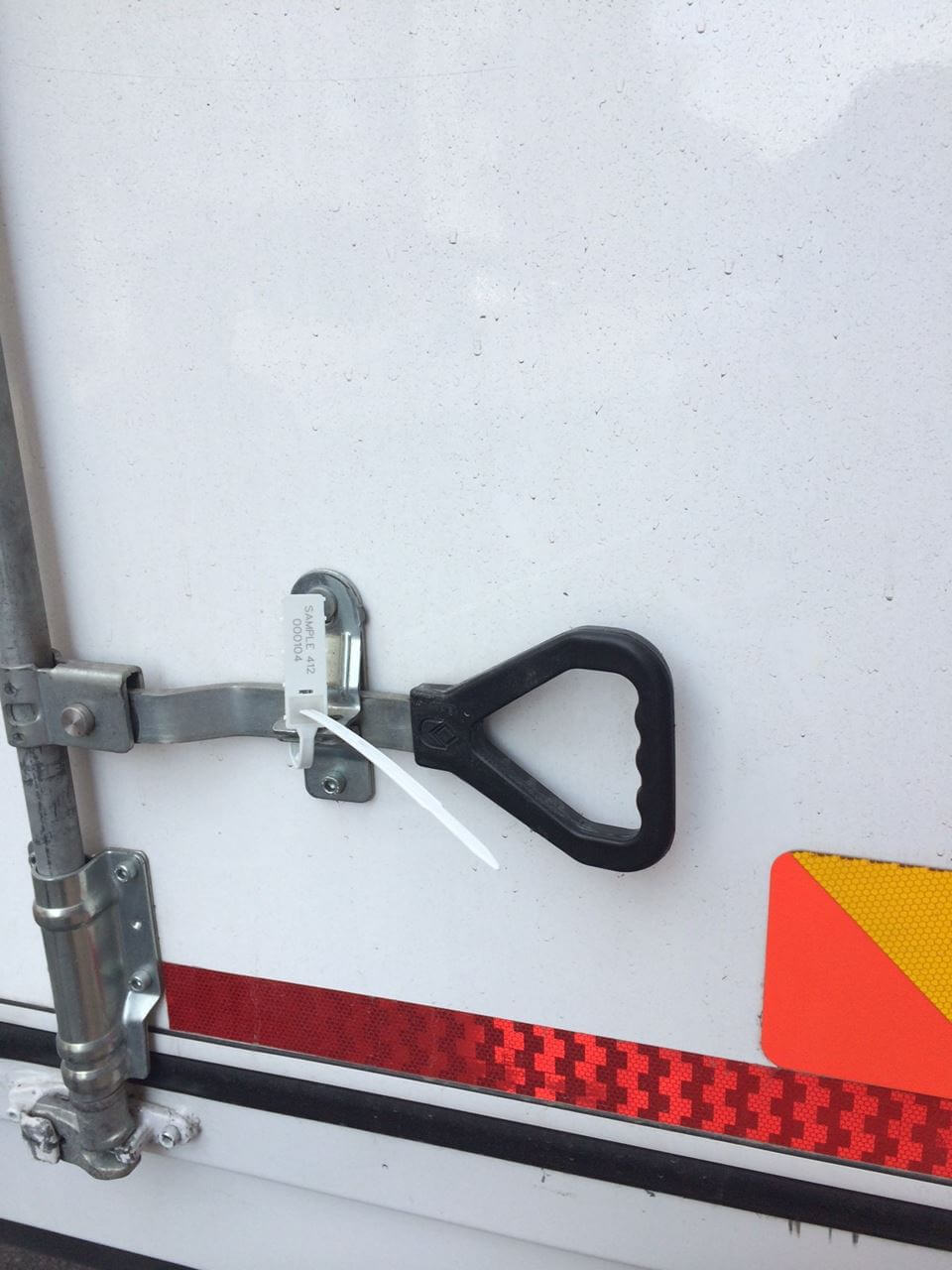
However, tamper-evidence alone isn’t enough. More often than not a security seal will have its own unique serial number. As an example, a logistics haulier might wish to seal curtain-sided lorries with a uniquely numbered security seal; record the particular serial number at its origin; and then ensure that the same seal is intact without signs of tampering at the arrival destination. This reduces the risk that unauthorised users might replace a security seal whilst in transit. As well as sequential numbering, users might opt to use their company logo / other markings to uniquely identify the seal.
Not all security seals are made equal.
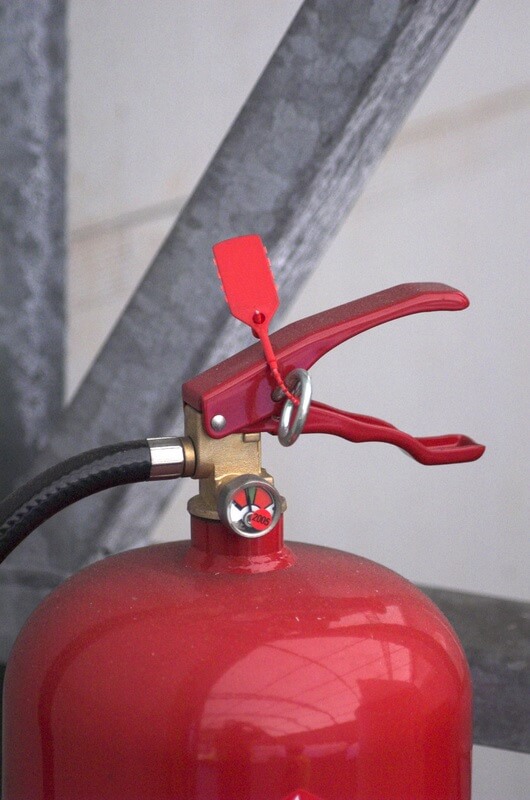
Security seals are designed with particular applications in mind. Some seals, such as the Fireseal are designed for very low-break strength and are purely “indicative” in nature. They are easily opened, and particularly suited to applications where immediate access is required: sealing fire extinguishers, medical crash trolleys, and spill kits are all typical examples of their use.
Certain seals are intermediate in nature: combining indicative tamper-evidence with a medium-to-high level of physical strength (for example, featuring a pulling resistance of greater than 40 Kgf). Such seals require removal by way of cutting snips or by way of a specially designed tear-able parts of the seal. Our UNI-412 and UNI-413 seals are examples of such products.
At the other end of the scale, some security seals are designed with much higher physical resistance in mind, so that only specialist bolt and cable cutters are suitable to remove the seal. Specifically, in most cases where shipping containers are being moved internationally, security seals must adhere to the “high-security” ratings applicable within the ISO 17712:2013 standards. For example, our Locktainer 2020SH bolt seal is fully-compliant with ISO17712 and CT-PAT regulations. These regulations ensure that container seals have been rigorously tested for their strength properties and their resistance to common methods of interference.
You can read more about such compliance in our blog: Compliance with C-TPAT and ISO 17712:2013 Standards for High-Security Seals.
Security seals also come in different shapes and sizes. As well as the pull-through plastic seals and high-security bolt seals mentioned above, there are number of key categories for particular uses. For example, cable seals are used as very strong yet flexible, adjustable length seals with high pulling strengths, suitable for heavy-duty applications such as oil drums, high-security shipping, chemical tankers and many more applications.
Yet another type of security seal is our adhesive security labels and tape range, which can be applied to flat surfaces and which, when removed, leaves behind a residue as its tamper evidence. The residue will often have a word repeated in it such as ‘opened’ or ‘void’. Alternatively, the label itself can delaminate, so that this wording appears in the label itself, leaving the applied surface untouched.
Certain types of products also incorporate security seals and tamper-evidence within their design – for example, our re-usable security envelopes and mail pouches incorporate locking mechanisms which can be sealed using disposable security seals which can be snapped off and replaced.
Finally, a growing trend looking forward is towards electronic security:- electronic seals which incorporate technologies such as unique number generation for re-use, GPS trackers and RFID technology. IntelleSeal T is an example of an electronic seal for use on trucks and trailers.
 | 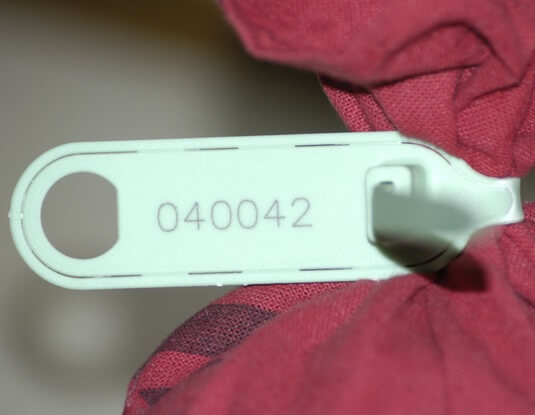 |  |
Identification ties and tags are normally used to fasten, enclose and identify a particular object or asset; or to communicate particular information about whatever is tagged.
The emphasis for identification ties is not in tamper-evidence – such ties are not designed to prevent illegitimate tampering. For example, because locking chambers are not designed to be tamperproof they can be manipulated (albeit only intentionally) so that ties can be unfastened and re-closed without the knowledge of the legitimate user.
However, for the likely uses of identification ties this is not a concern because the sealed item does not have intrinsic value; there would not be anything to be gained by tampering with the item. For example, typical uses include bundling or stowing wire cable installations; sealing of waste – including industrial and clinical waste bags; packaging of goods; inspection tagging; industrial equipment and low-value asset tagging. In such applications, the simple design of ties ensures that a solution is provided that is more cost-effective than a more sophisticated security seal.
Where identification is a primary concern of the user, flexibility of tie sizes and printing types also becomes an important consideration. Our range of identification ties are available in many sizes and with different print options – including sequential numbering, printed information, company logos, barcoding and more. For example, our printed cable ties are available in sizes 200x4.8mm, 300x4.8mm and 370x4.8mm to fit the required application. Our printed Tab Ties also offer even greater flexibility, allowing the printing of more detailed information on the tag end of the product, including bespoke barcoding, QR codes and logos as necessary.
If you have any questions about our range of security seals and identification ties, please feel free to give us a call on 01829 760000 or [email protected] to discuss your requirements.