Email us
Call us
01829 760000
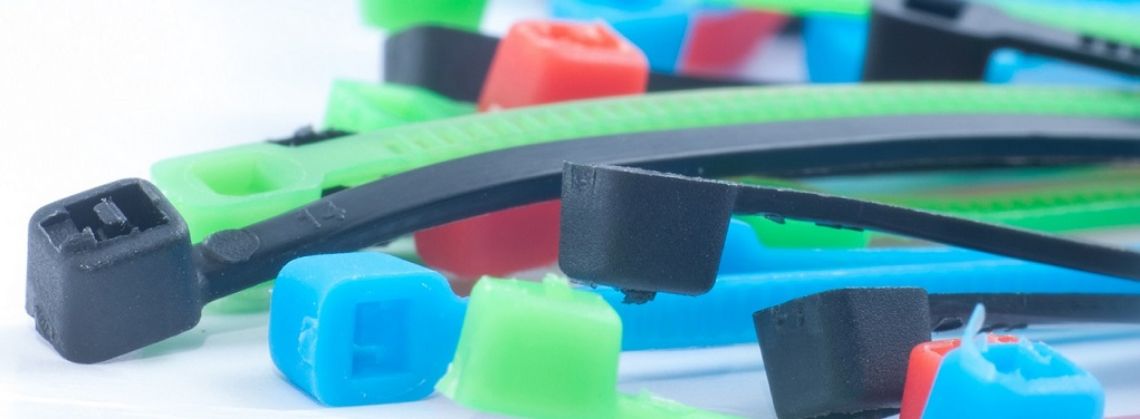
Cable ties have a wide range of uses, and are suitable for a multitude of uses in various industries, from heavy industrial use to securing plants in the garden. Choosing the correct strength tie is an important consideration. Below are some points for consideration when choosing the right cable tie for the job.
Cable ties are measured in mm. They come in a range of length and widths, ranging from miniature 100 x 2.5mm ties to very heavy duty 1530 x 12.7mm ties. The wider the tie, the higher the tensile strength of the cable tie.
Nylon cable ties will have a tensile strength ranging from very low (8 kgf) to much higher (114kgf). Even ties with a high tensile strength will require a low insertion force, making them fast, convenient and easy to use.
| Cable Tie Width (mm) | Minimum tensile strength (kg) | Product Link |
|---|---|---|
| 2.5 | 8 | |
| 3.6 | 18 | 3.6mm Intermediate Cable Ties |
| 4.8 | 22 | 4.8mm Standard Cable Ties |
| 7.6 | 55 | 7.6mm Medium-Duty Cable Ties |
| 9 | 80 | |
| 12.7 | 114 | 12.7mm Heavy-duty Cable Ties |
If you are planning on using cable ties in an outside environment with UV exposure it is recommend to use a UV & Heat stabilised cable tie. These ties have a higher carbon content which results in a higher resistance to UV exposure. Heat stabilised cable ties are better suited to environments where higher than usual heat is to be expected such as boiler rooms or where the ties are being used to secure heat conductive cables. Please contact us for a quotation for these specialised cable ties.
Stainless steel cable ties are made from non magnetic stainless steel. They provide a stronger tensile strength than traditional nylon cable ties and they have a wider operating temperature range of -60°C to +300°C. They are fireproof and UV resistant. They are great for use in harsh chemical environments or where extreme temperatures need to be considered. If the stainless steel cable tie is for outdoor use we can also supply a coated stainless steel cable tie - either polyester coated or epoxy coated for increased resistance to heat and chemicals. They are ideal for use in harsh environments such as offshore, marine or heavy industrial.
| Width (mm) | Minimum tensile strength (kg) | Product Link |
|---|---|---|
| 4.6 | 68 | |
| 7.9 | 136 |
These ties are specifically used in the food, beverage, pharmaceutical and chemical industries where contamination control is critical. They are a unique blue colour containing specially formulated metal content so that the tie is detectable by metal detectors. Ideally suited as part of a HACCP (Hazard Analysis Critical Control Point). Made from nylon material they offer excellent tensile strength and reliability whilst ensuring additional safety standards. They are available in a range of sizes.
In summary, choosing the right cable tie is paramount to a successful project. If you would like further guidance on the right cable tie for your specific enquiry please feel free to contact us for further advice.
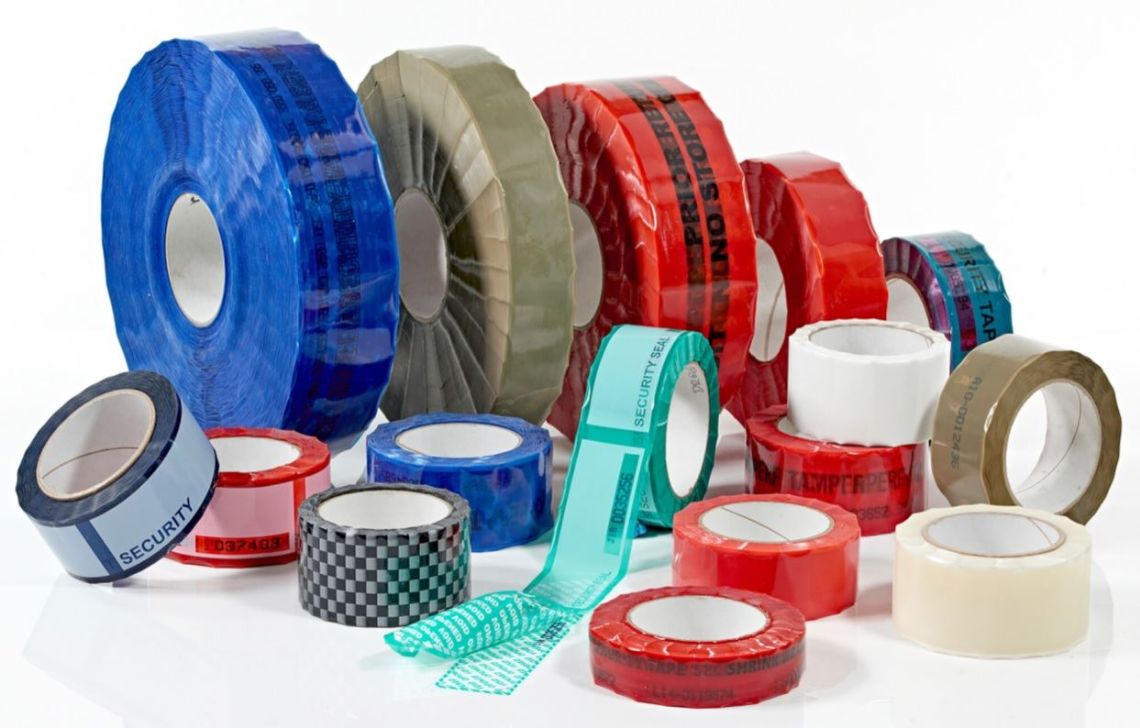
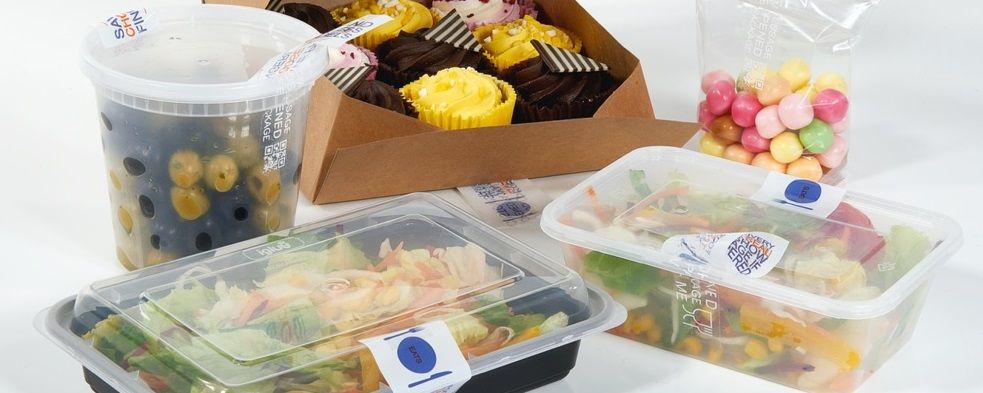
Security Tapes are used across logistics, in pharmaceutical / laboratory companies as well as in general industry, most often as a tamper-evident box tape to provide security and chain of custody through supply chains. In this guide we provide an overview of the types of security tape available, the range of customisation options, as well as the types of applications security tape is most used for.
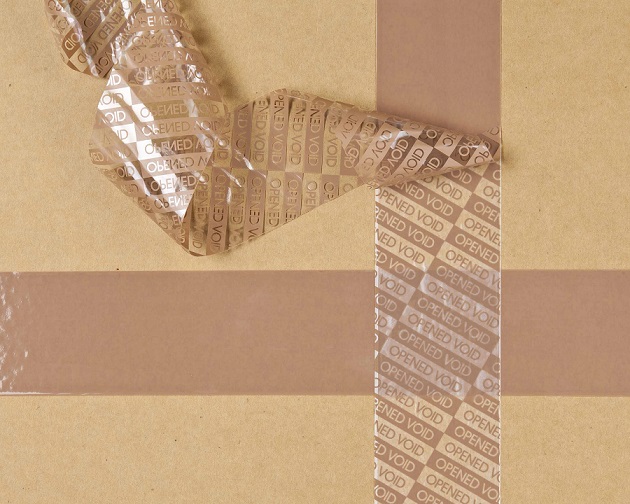
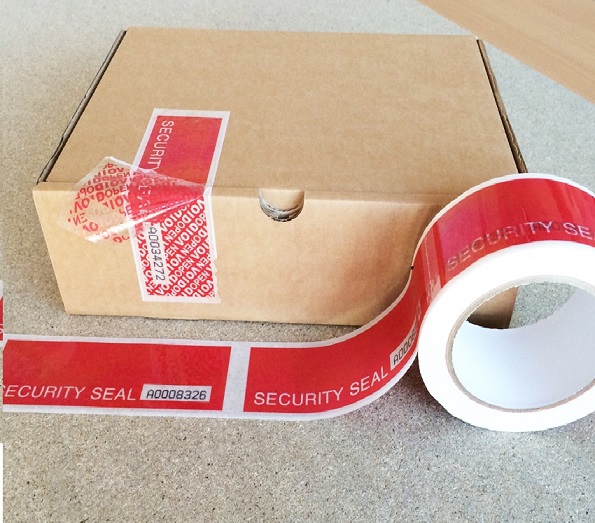
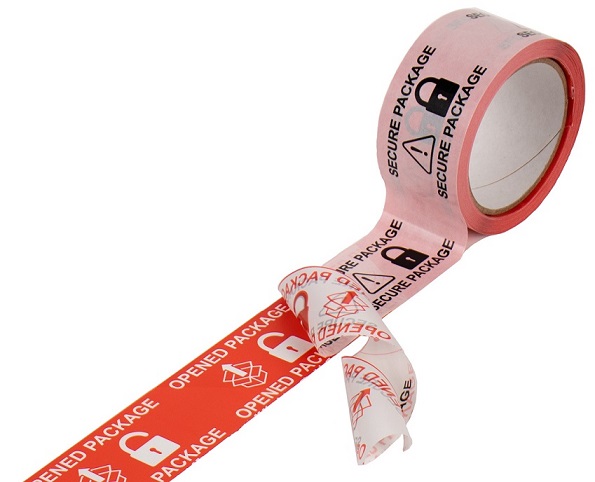
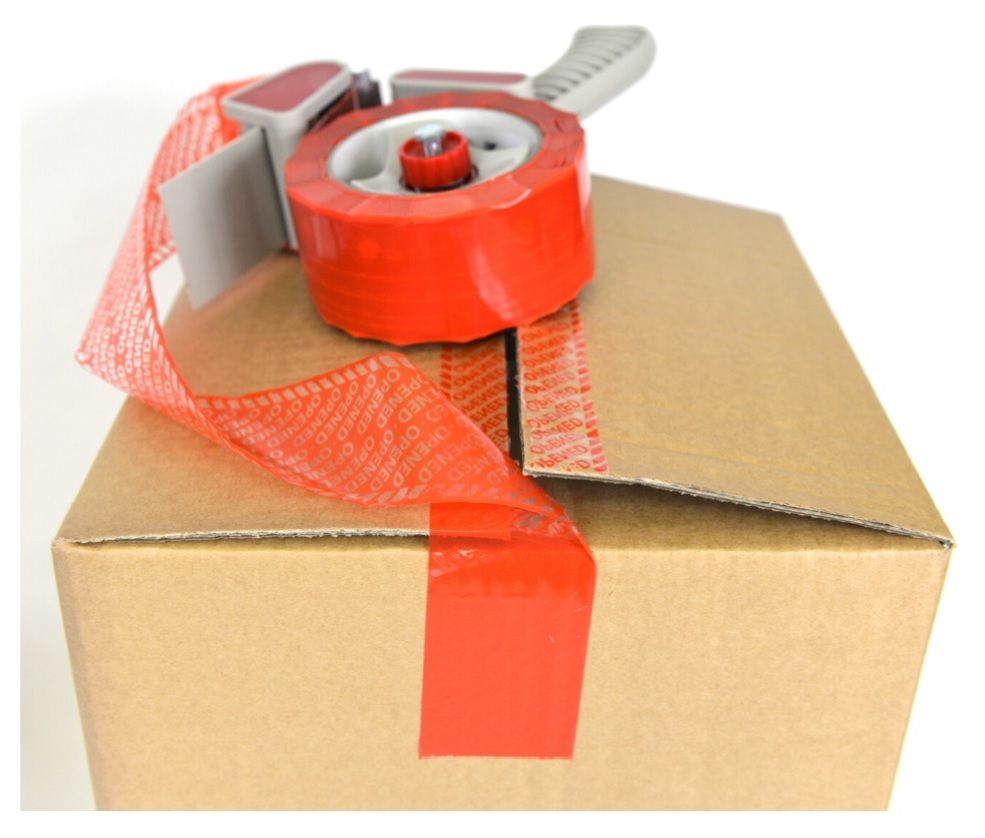
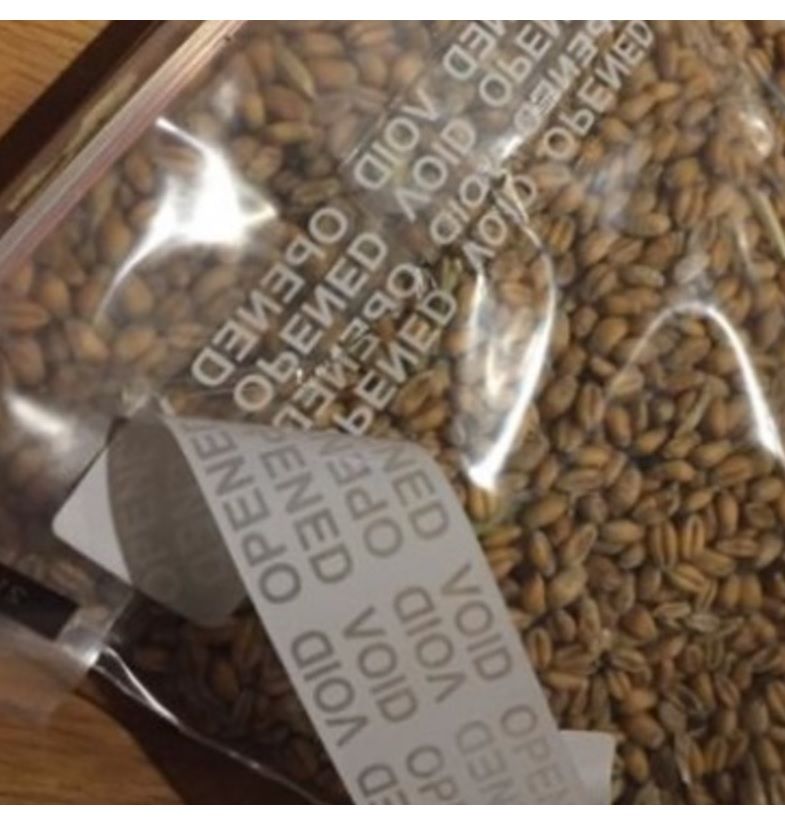
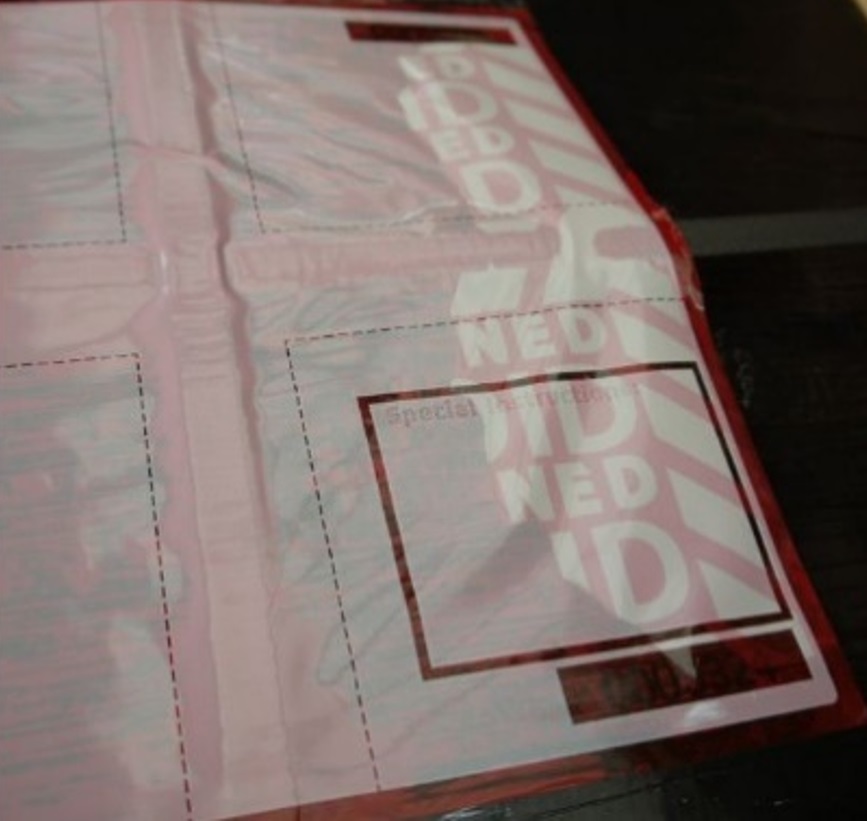
Security box sealing tapes are manufactured with specialised films and pressure-sensitive adhesive, capable of revealing a ‘void message’ on sealed surfaces (such as crate and carton surfaces) upon removal; they can even be used on metal and plastics, for example for security of shrink-wrapped pallets and for sealing cargo containers used in secure airfreight shipments. Upon removal the security box tape the film will also ‘delaminate’, causing the void message to also be shown through the film itself – meaning that opening or tampering is obvious even if attempts are made to stick the tape back down.
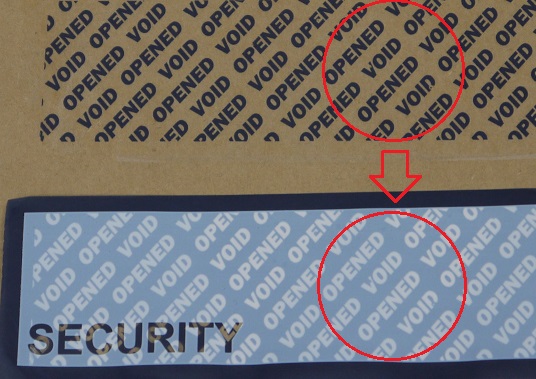
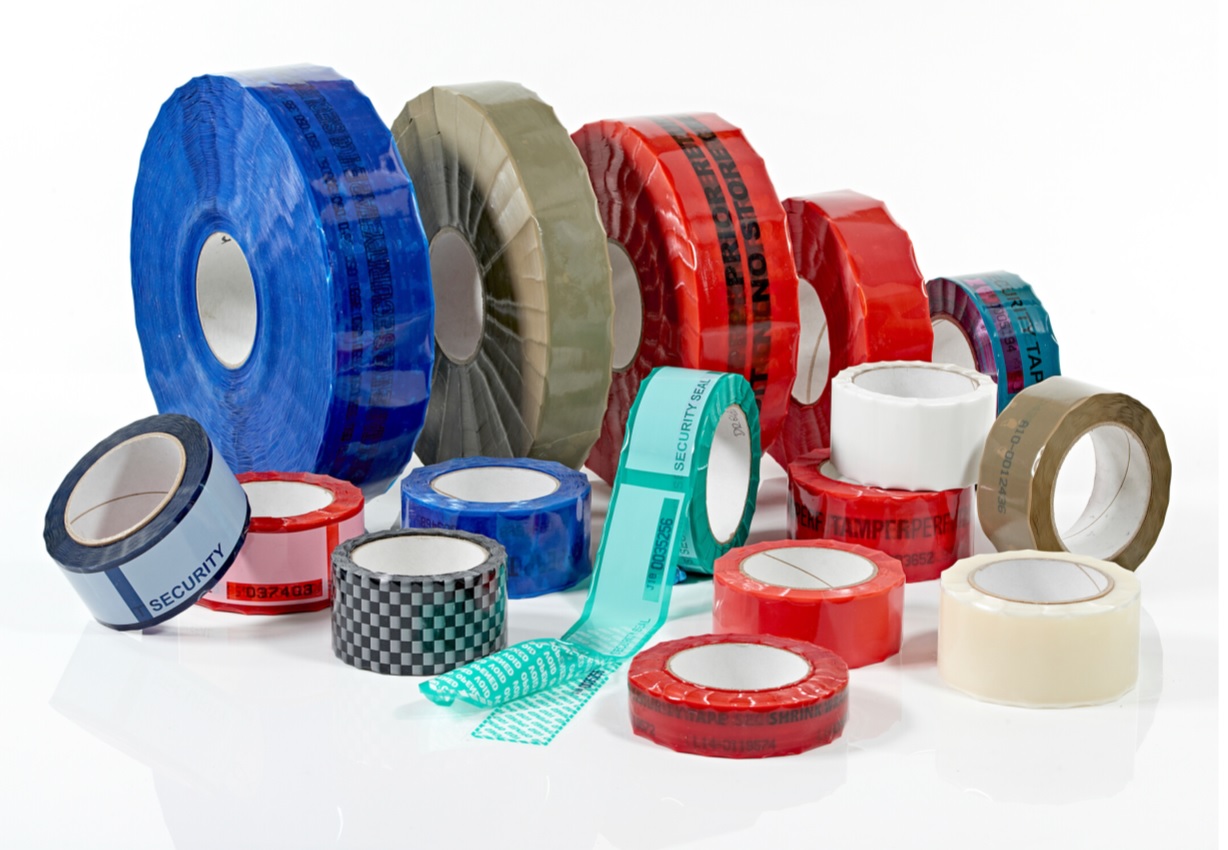
Security tapes are supplied in different formats and styles, and it is useful to understand the distinctions so that you choose the most appropriate and tamper-evident solution possible for your application.
| Overt Security Tape | Covert Security Tape |
|---|---|
![]() | ![]() |
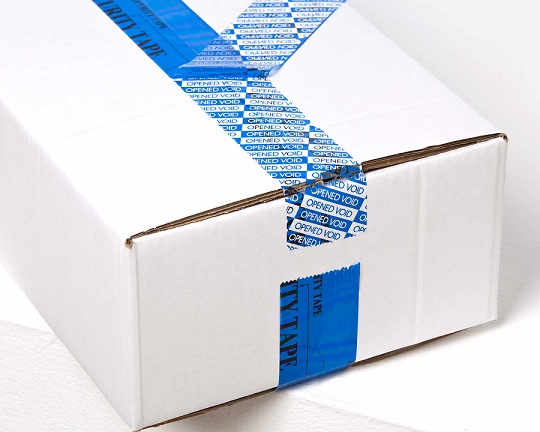
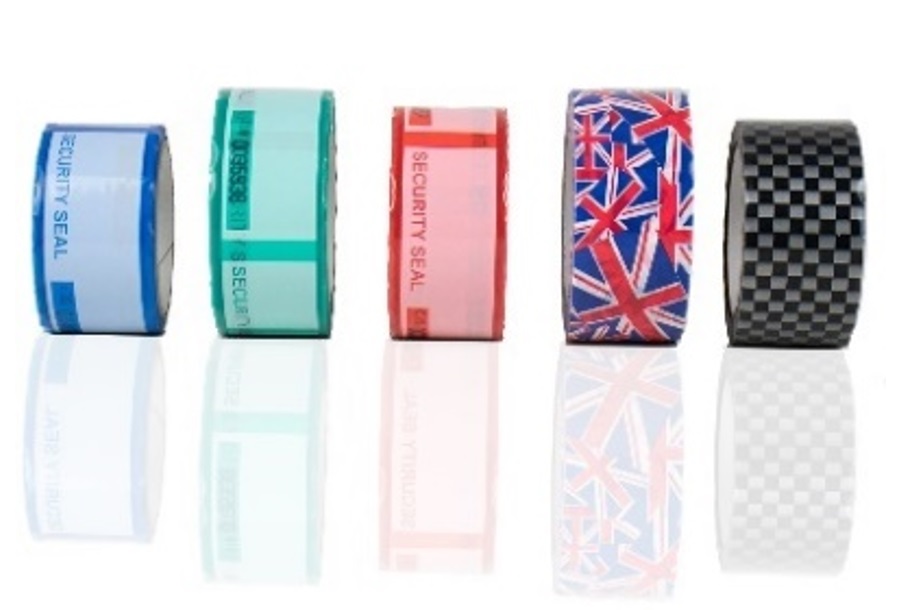
'Overt’ security tape is so-named because this type of tape clearly and ‘overtly’ notifies the handler of the sealed package that security measures have been implemented; this can help to discourage tamper attacks or inappropriate handling in the first instance, due to the risk of identification or disclosure. | 'Covert' security tape has been designed to look like a normal box tape until it is removed; only then do security void messages appear underneath. Covert tape is useful to highlight vulnerabilities in your supply chain, and to trace under whose custody cartons are being opened or tampered with. |
| Continuous Security Tape | Perforated Security Tape |
|---|---|
![]() | ![]() |
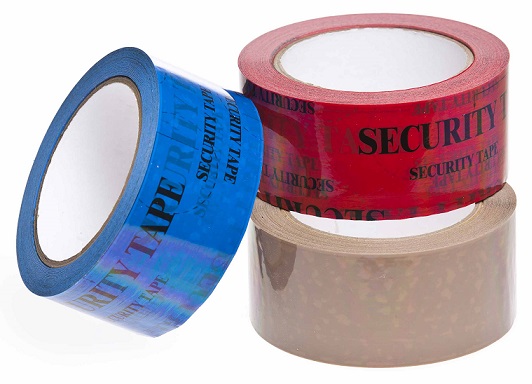
Continuous rolls of security tape are the simplest form of security tape. Security tape is often produced in similar reel formats to standard packaging tapes, e.g. 48-50mm width x 50-66metre long rolls. They can be used in traditional tape dispensers, making them easy to apply to cartons, boxes and so on. | Perforated security tape is generally considered a more secure form of security tape compared to continuous rolls. This type is supplied in segments, typically 10-15cm in length. Each segment has its own sequential security number, meaning that you can seal your cartons or pallets with a particular range of security numbers, for checking against packing lists, manifests etc. |
| STANDARD SECURITY TAPE | CUSTOMISED SECURITY TAPE |
|---|---|
![]() | ![]() |
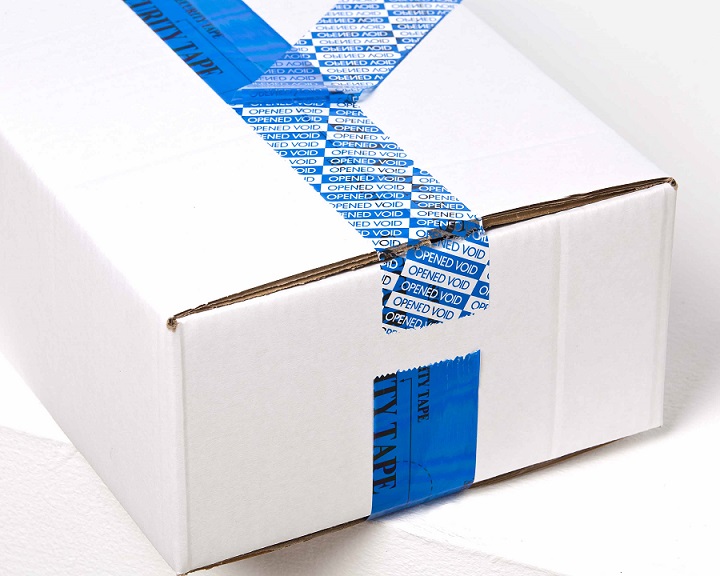
Standard security tapes are available widely, and can be preferable in scenarios where you did not wish to ‘broadcast’ that a sealed consignment relates to your organisation, brand etc. Branded security tapes can sometimes unwittingly notify fraudsters or thieves of which consignments contain higher value or desirable cargo or goods. | Customised security tape can be supplied with bespoke designs, colours, widths, lengths, and surface and sub-surface prints. Customised security tape can convey brand messaging as well as promote security… Bespoke security tape gives your packaging a ‘premium’ and bespoke feel, particularly for consumer apparel, fashion and electronics. For additional security, it is particularly useful to ‘hide’ security information in the sub-surface void messages – the full customisation options are noted below. |
| PLASTIC-BASED SECURITY TAPE | PAPER-BASED SECURITY TAPE |
|---|---|
![]() | ![]() |
| Plastic security tapes continue to be very popular due to their high-tack, water-resistance and bright colours. Our plastic security tapes are manufactured from 30% recycled content plastics and can be readily recycled at end-of-life. | A recent and exciting innovation, paper-based security tapes are sustainable, high-performing and secure. The 100% paper-based tamper-evident tape performs well even on rough and uneven surfaces, and have unparalleled sustainability – reducing your plastic use to 0% and with zero packaging waste per roll. |
There are countless ways in which your security tape can be customised to suit your application. Bespoke security tape, particularly manufactured with bespoke surface and sub-surface prints, can increase the tamper-evident capabilities of your security packaging, making it more difficult for counterfeiters to replace packaging without leaving obvious signs of tampering.
Below are just some of the customisable features which we can assist with: -
| FEATURE | DESCRIPTION | ILLUSTRATION |
|---|---|---|
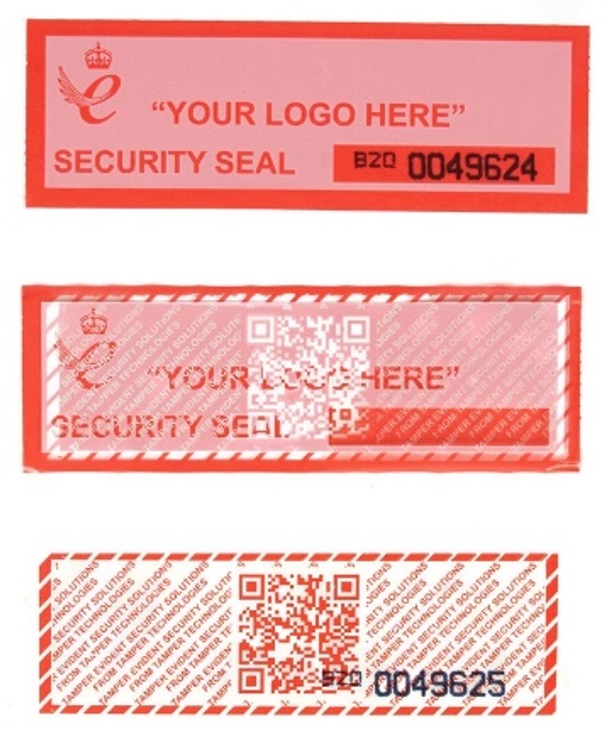
| Customised surface prints | Custom printing on the surface of your tamper- evident tape can incorporate your company or brand logos, corporate colours, and other application- or product- specific branding. It can also be used to convey information to users about opening the package - for example that product returns may not be valid if security tape is voided. | ![]() |
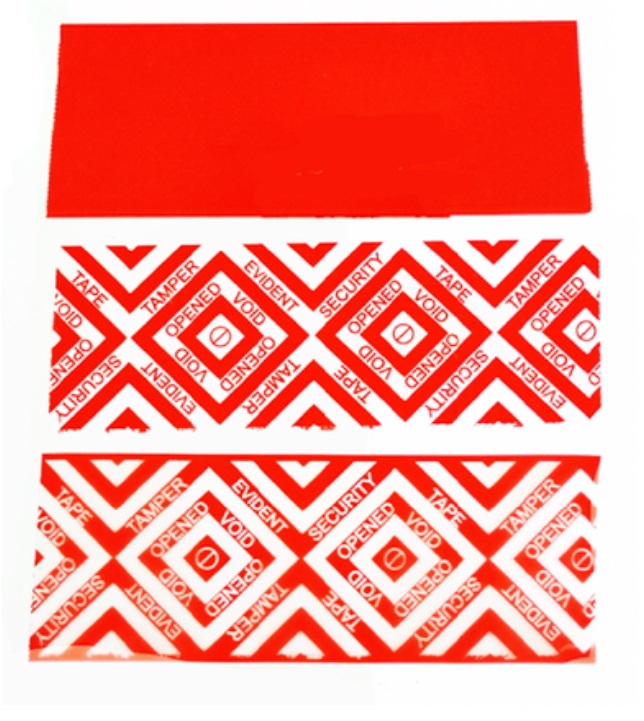
| Customised sub-surface prints | The “sub-surface print” is what appears on the sealed surface (i.e. carton, crate or pallet surface) when the security tape is removed… This can be a custom void message, QR Coding, Barcoding and more… Custom messages increase the security of your packaging and can convey bespoke operational or user information for your benefits within your supply chains (including traceability – see next feature). | ![]() |
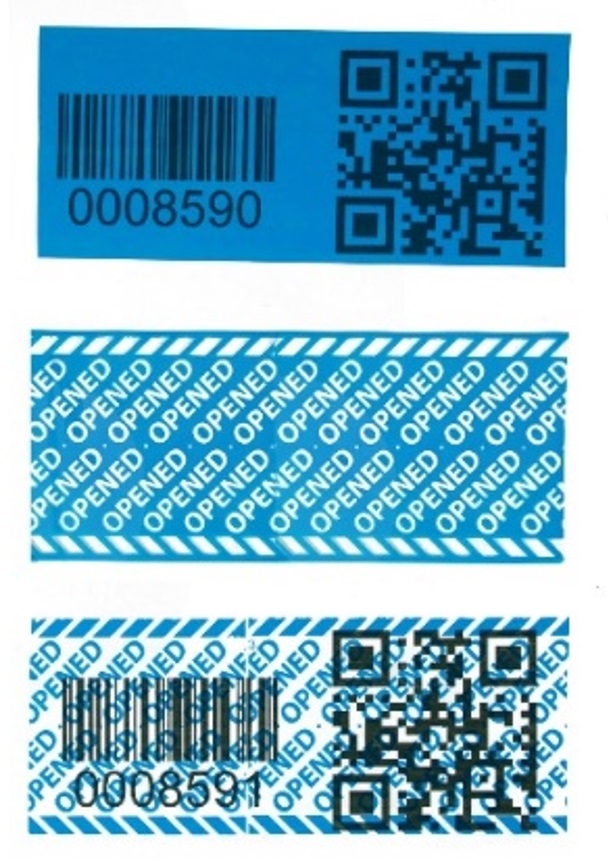
| Customised Traceability | Unique security numbering in multiple formats (including barcodes, data matrices etc) can be printed onto to the surface or even printed into the sub-surface void message itself. Being able to security seal your cartons and packages with your own bespoke security number ranges can greatly increase traceability and audit control within your supply chains, allowing to identify vulnerable shipments and weaknesses. | ![]() |
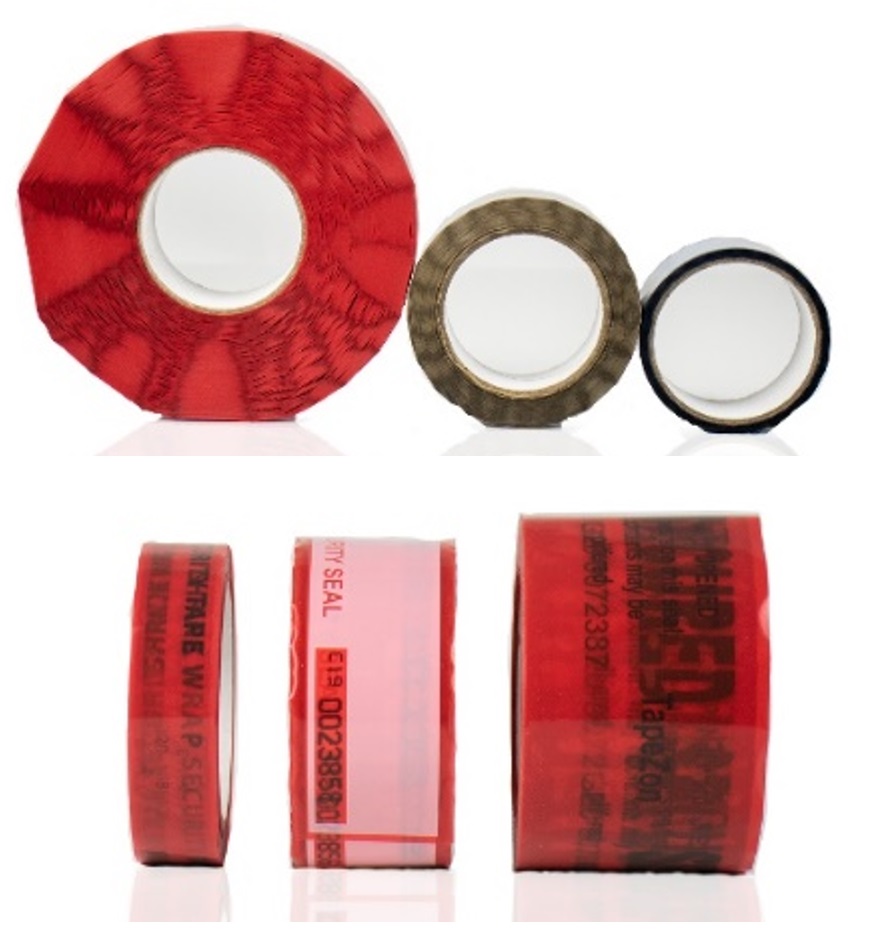
| Custom Roll Widths and Lengths | We are able to supply security tape in customisable widths and lengths. Tapes can be produced in widths from 25 – 240mm, and in reel lengths between 10 and 600metres. Specific roll lengths can prove particularly useful for applying a consistent quantity of security tape for each cargo consignment – for example, our 20metre reel pallet security tape provides an appropriate amount of tape to seal a shrink-wrapped pallet consistently each time. | ![]() |
| Complex Colour and Design Options | We can print security tapes using the CMYK colour process (CMYK – Cyan, Magenta, Yellow and ‘Key’ (black)). The mixture of these colours can provide complex and visually appealing security tape designs. | ![]() |
Security tapes are used to seal boxes, crates and pallets and many other types of enclosures. Security tape is most commonly used for tamper-evident security for sealing of cartons, pallets and packages in the logistics supply chain…
| SECURITY TAPE ON PALLETS | SEALING CARTONS AND CRATES | GENERAL PACKAGING SECURITY |
|---|---|---|
![]() | ![]() | ![]() |
Due to the critical nature of maintaining the integrity and tamper-evidence of sealed enclosures, security tape is used particularly in the pharmaceutical, food & drink and consumer electronics sectors.
View our Range of Security Tape and Security Labels
We have put together the Top 10 Use Cases for Cable Security Seals, and explain in each case why cable seals are particularly suited for these types of applications.
Cable security seals are flexible and strong types of security seals popular across all types of industries, including freight and transport, food & pharmaceutical, industrial and manufacturing and other sectors. We have put together the below Top 10 Use Cases for Cable Security Seals, and explain in each case why cable seals are particularly suited for these types of applications.
| Use Cases of Cable Security Seals | Illustration |
|---|---|
Road Haulage / Trailer Security Cable seals are often used to lock through the locking hasps of road trailer doors, as a stronger solution and more tamper-evident solution than easier breaking pull-through or fixed length trailer seals which can be used alternatively. Our flexiGrip 150M seal is a HMRC Customs accepted seal, and road freight transiting the UK-EU customs borders can utilise customs-accepted cable seals as a cost-effective security seal solution for cross-border road shipments. | ![]() |
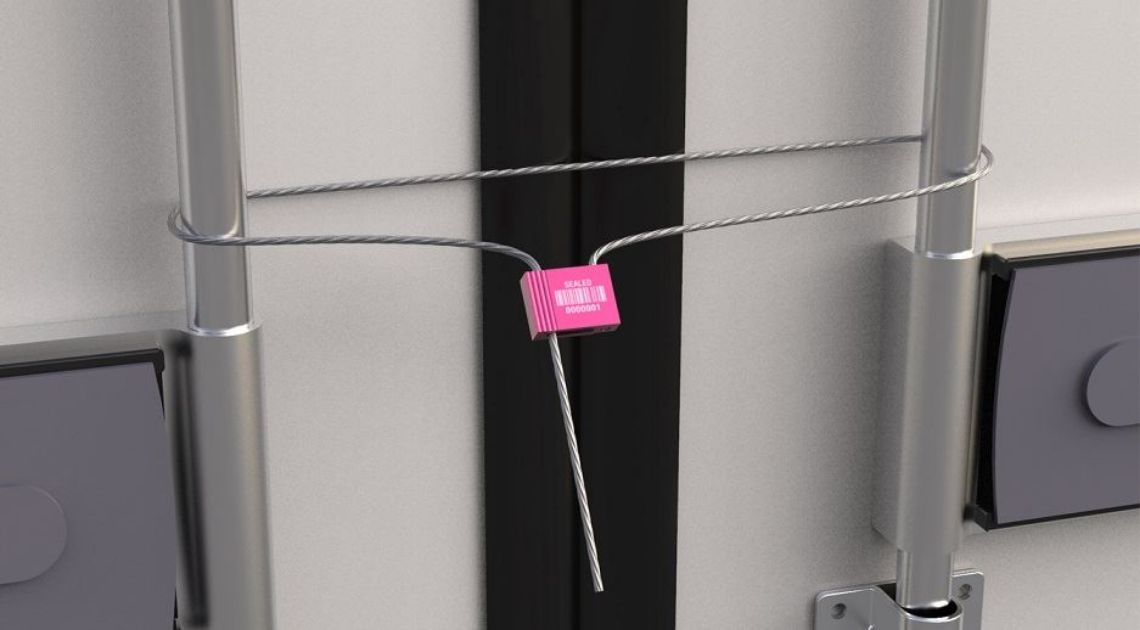
Shipping Containers ISO17712 High Security Cable seals are strong barrier seals suitable for sealing of shipping containers transiting customs borders. Cable Seals are sometimes preferred to more conventional bolt seals for shipping containers to provide increased security, particularly for high value shipments involved in food/drink and pharmaceutical logistics: i. Extra-long cable seals can seal around the vertical locking bars, which can provide superior security compared to sealing at locking hasps ii. Our specialised double-locking Flexigrip 500MD is a heavy-duty cable seal which provides a double locking mechanism, for increased security shipments. | ![]() |
Air Cargo Containers Air cargo containers are often subject to vibration, knocks and shocks during air transport and ground movements, and as such lower-strength plastic pull-through seals are not often strong enough to provide effective tamper-evident security. Cable seals provide higher strength security to ensure that seals do not open whilst in transit, providing a full chain of custody of sealed air cargo enclosures from point-to-point. | ![]() |
Rail Cars Cable seals are ideal for sealing individual rail freight car doors. Our range of cable security seals have rugged design features to ensure chain of custody during rail freight movements. | ![]() |
Intermediate Bulk Containers (IBCs) Light-weight cable seals with smaller apertures, for example 1.5mm cable diameters (100S and 150M Models), are suitable for sealing through apertures in Intermediate Bulk Container outlet points. Cable seals seal IBC’s against unauthorised or illegitimate access and maintains the chain of custody of full and empty IBC’s whilst transiting through the supply chain. | ![]() |
Postal and Mail Sacks and Bags Cable seals are well-suited as high-strength pull-through security seals, where the application in question demands increased strength or tamper-evident security. For example, mail sacks might contain particularly sensitive items or cargo requiring the additional strength and tamper-evident protection of cable seals. Cable seals can withstand over 2000KgF of pulling strength force (depending on model) and will not break in transit accidentally. | ![]() |
Bulk Tanker Hatches, Manholes and Valves Chemical and fuel bulk tankers often have multiple points of access, and cable seals are an excellent way to seal these points of access so that legitimate users can maintain an audit and chain of custody of when, how and where tanker contents have been accessed. | ![]() |
Open Top Barrels and Chemical Drums Cable seals can provide a strong tamper-evident lock to sealing the metal clasp mechanisms of open top barrels, ensuring drums remain sealed until delivered to customers, or received back to depots etc. | ![]() |
Valve Lockout Cable seals, sometimes known as “car seals” when used in the context of valve lockout applications, can provide a safe and effective way to isolate valves of all kinds, including quarter-turn, 3,4,5-way valves, gate valves, and butterfly valves. Car seals / cable seals can prevent the actuation of equipment, assisting in isolation and inspection programs. | ![]() |
Pallets & Crates Our StrapSecure cable seal and pallet strapping solution is a convenient and cost-effective way to seal the intersection of strapping which can be used to seal pallets and crates being transported through the supply chain. StrapSecure is particularly suited for sealing of APHA agricultural and pharmaceutical consignments, as they provide security on the individual pallet-level. | ![]() |
See our full range of cable seals for more information.
Please contact us at [email protected] or +44 (0) 1829 760000 to discuss your cable seals requirements today.
Most shipping containers transiting around the world will be sealed by way of a High-Security Bolt Seal, and with good reason. Bolt seals are inexpensive but strong barrier seals which cannot be opened except by application of heavy-duty bolt cutters which physically and permanently destroy a security seal, making reinstatement impossible. Bolt seals are required for international customs movements and must conform to internationally agreed standards for manufacturing good practice, strength and tamper-resistance, as stipulated under ISO17712 “High-Security” and C-TPAT Regulations.
However, bolt seals are not the only kind of security seal which can be used, and for certain types of shipments or in particular scenarios it is more suitable to use other types of security seals for sealing shipping containers, and in this guide we explain why this is the case.
| Type of CONTaiNER security seals | illustration |
|---|---|
Bolt seals are the original form of security seal for shipping containers. They are made up of two separate parts which include the bolt pin and the barrel, supplied together and with counterpart seal numbers engraved on each part. Container bolt seals are locked by pushing the pin into the barrel – the barrel has a self-locking system, and once sealed cannot be opened again; a bolt cutter must be used to open the seal, which permanently destroys the seal and makes reinstatement impossible. | ![]() |
The Fork Seal is another type of seal fully-compliant to ISO17712:2013 HSS (high security seal) for sealing shipping containers. Fork seals provide complete wrap-around protection of container locking bars of any size and offers the highest form of container security; the strong steel can only be cut at the designated cutting point using the very heavy-duty bolt croppers. As one of the stronger barrier seals available on the market today, Fork seals are preferred by some users when sending high-value or high-target shipments globally; for example, shipments of whiskey and other high-value food & drink specialities, as well as valuable or sensitive pharmaceutical shipments. | ![]() |
Cable security seals, also known simply as ‘cable seals’ or wire rope seals, are flexible and strong types of security seals. Our higher strength cable seals (>3.25mm diameter) are as suitable for high-security sealing of shipping containers as bolt seals because they conform to the same ISO17712 High Security standards. Indeed, cable seals can be a higher security solution than bolt seals, because their flexible wire construction and customisable lengths mean that they can seal around vertical locking bars, rather than through container door locking hasps/ cams, which can be susceptible to tamper attempts. As long as a cable seal is progressively tightened as tightly as possible then both doors are sealed shut and cannot be opened, regardless of any attacks on locking hasps or locking cams. Additionally, we also supply our double-locking Flexigrip 500MD, which provides two locking mechanisms within one seal, for a superior sealing solution. | ![]() |
Our Globe seal is a robust all metal strip security seal, providing secure protection for shipments in transit, including for sealing of trailer doors and railway cars. It is a reliable and immediate indicator that goods have been received as sent. The seal features a locking mechanism totally enclosed in the head, which is secured by two independent spring rings. The seal is applied without the need of tools and is certified as an ISO17712: 2013 'indicative' classified security seal. | ![]() |
Plastic Security Seals for Shipping Containers Plastic seals are indicative in nature – whilst they provide clear evidence of tampering, they can easily be cut and broken, and so serve as a visual indication of tampering rather than being a barrier to entry. As such, they are often thought to not be appropriate for container security. However, this is not always the case! Shipping containers are not always under customs control; once shipping containers have arrived to port and have been customs cleared, they have entered into free circulation into the domestic market, and are making domestic onward journeys, in a similar way to road haulage trailers. Plastic security seals can then serve as a tamper-evident, easily accessible solution which continues to provide a level of security to the container, without being as heavy-duty or costly as container bolt seals. Another example is using a plastic security seal a tamper-control check on empty containers returning to depots or terminals. Popular models include our DoubleLock seals and FleetLock seals. |
|
Container Locks Keyed Container Locks are the strongest possible types of lock, because they are keyed and are designed to be used many times over many shipping container consignments. Like all keyed locks, container locks have a disadvantage in that it relies upon of appropriate security and availability of the access key; but they do have their uses in particular scenarios - please contact us should you like further information on the types of container locks we can supply. | ![]() |
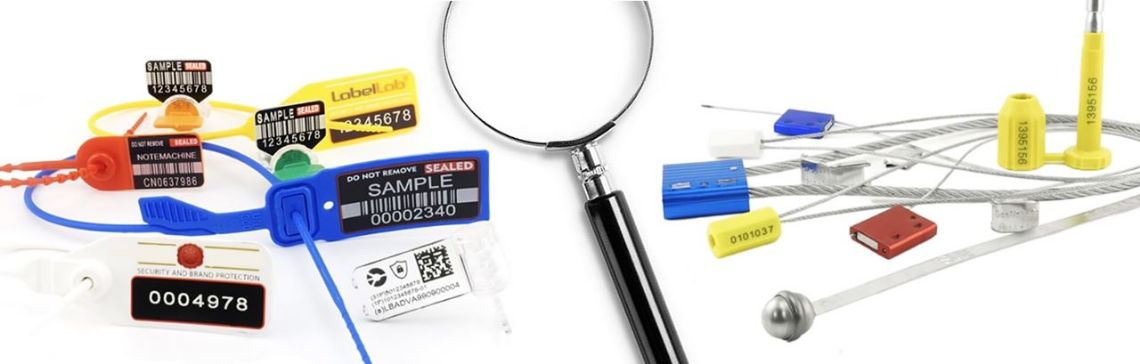
The range and different types of security seals and tags can be confusing to the uninitiated, so we have produced the below quick visual guide for understanding some of the key differences, and how particular types of security seals might be suited to use cases in your organisation. For further help and assistance, please contact us at [email protected]
![]() | ![]() | ![]() |
| Plastic Indicative Seals, 2 types: (1) Pull-Through Seals seal through locking chamber & pull progressively tighter, suitable for sealing of mail & cash bags; (2) Fixed Length Seals form a fixed loop, suitable where over-tightening might cause accidental breakage in transit (such as trailer hasps). | Security padlock seals are fixed length seals which are small and suitable for sealing of small enclosures like trolley apertures, first aid and other equipment kits, security bag zippers etc. They can easily be sealed and broken by hand for quick and convenient application. | Bolt security seals provide barrier control for shipping containers. They consist of a counterpart barrel and pin with duplicate numbering, sealed together and requiring bolt cutters to remove. They must meet ISO17712 high security standards and are suitable for cross-border customs movements. |
![]() | ![]() | ![]() |
| Metal Cable seals are strong barrier seals, and in their heavier gauge options (Flexigrip 325M and Flexigrip 500M) are also ISO17712 'High Security' approved for customs movements. The pliable wire cable can be flexibly used to seal through hasps and around vertical locking bars, providing increased security. | Metal strip seals are useful option between plastic indicative seals and heavier duty cable and bolt seals - they provide a higher tensile strength of between 50KgF - 100KgF compared to plastic seals, but are most cost-efficient compared to cable and bolt seals. Their thin straps make them well-suited for sealing small apertures, such as TIR cords and railcars. | Meter wire seals are products suited to sealing utility (gas and electric) & taxi meters. They range from simple plastic and metal seals which can be crimped onto sealing wire with pliers, to more sophisticated self-locking seals with inner mechanism. Wire seals are produced with narrow gauge wire to fit through the small apertures of meters (<1mm). |
![]() | ![]() | ![]() |
| Tote box plug seals are a specific type of fixed length seals designed to securely seal the lids of attached lid containers (ALC's) firmly shut. Plug seals seal down flush on to lids, making stacking of tote boxes easier, and can also be produced with paired numbering to seal both of end of the crate with the same security number. | Security labels and tapes are their own category of security seals which work on the basis of their tamper-evident film and adhesive properties, rather than by mechanical anti-tampering. By their nature, they are suitable for sealing flat surfaces, such as carton and pallet seams and edges. | Electronic seals are their own subset of security seals which use electronic sensors to detect a tamper-evident state. They are generally reusable seals with a higher initial cost which is spread over many thousands of uses. |
Our friendly and knowledge team would be happy to discuss your security seals needs - please contact us at [email protected] or +44 (0) 1829 76000.
Security seals can help to protect your cargo, valuable assets and confidential items. They serve an important role in loss prevention through reducing the incidences of theft, fraud and lost goods. Every year, hundreds of millions of pounds of valuable cargo is lost in such ways – and seals are one way in which these losses can be prevented at a tiny fraction of that price.
However, your cargo and your business are only protected properly when security seals are used as part of your wider supply chain, and due consideration has been made to the complete security of your logistics operations. Most risks which security seals are designed to mitigate – theft, pillage sabotage, smuggling etc – are human behavioural issues, and as such just as much attention should be paid to the humans involved in your security processes as to sourcing the appropriate seal itself.
No matter how well a security seal has been designed, seals only work if you have security at both ‘ends’ – at the point of sealing and at the point of opening – which in turn relies upon the security and reliability of your people. This goes to the very complex issue of organisation’s values and management systems, and how these are communicated to everyone working in the organisation. This of course goes beyond the scope of security seals, but what we can do below is to outline useful pointers to consider when setting up your protocols for security seals and how they fit into your wider supply chain.

The ‘onion skin’ principle is very useful when considering security measures – the idea being that an organisation should have a layered approach to security, so that if one security measure fails, then another will not. For example, consider combining security seals on a larger enclosure such as trailer doors, with security labels on smaller enclosures, such as pallets of cargo or even individual cartons of product.
This can apply not only to physical layers of security seals, but also in security methodologies applied. For example, CCTV in areas where seals are stored, sealed and opened will help you to identify suspicious activity or instances where personnel are not following agreed security protocols.
Consider this question: which individual within your organisation is responsible for the purchase of security seals? What would happen if a bad actor within your organisation ordered “copycat” seals for their own nefarious activities and started to use them... would you have systems in place to identify this? Are you using a reputable manufacturer of security seals who have systems to help? This is to illustrate the point that even before security seals have arrived on site, you need to be mindful that seals can be a target for fraudsters. Security seals can act as a false positive that all is well with consignments, and therefore are of value to individuals attempting to hide tampering. The risk increases once seals have arrived to your location, where they are at physical risk of interference. Would you notice if a box of seals was taken by an opportunist?
To minimise risks, security seals should be stored in a secure storage area, ideally with limited access by senior members of your team, and covered by CCTV to pick up any out of the ordinary circumstances. It is recommended that particular seal number ranges are allocated and distributed to designated teams in appropriately sized batches, as necessary for your operations. This can provide a tight audit trail and help to identify vulnerabilities as and when seal tampering / anomalies arise.

Allied to the above is the importance of recognising that seal numbers are important data which should be collected, collated and stored in a secure way as would be the case with any other type. Keep a controlled record of security number ranges being dispensed out and account for every seal being applied using a documented system.
Using barcoded seals can be useful and is increasingly common. Barcodes can be integrated with barcode readers on PDA’s for automated incorporation into your processes, and reduces the likelihood of human error. If you are using a paper-based system (as is still common for road manifests and bills of lading), make sure that a consistent process is followed, and make copies for archival where appropriate. Consider using seals with duplicated barcode labels on the reverse, which can be simply applied to corresponding manifests / paperwork, rather relying on rewriting or rekeying seal numbers.

Our seals are highly customisable and can be produced in different colours and with different markings – we can print QR codes, data matrices, logos, barcodes, and many other types of information. Consider using a system of colour or marking rotation, be that on a periodic rotation basis, or using different marked seals for different operations or teams.

It almost goes without saying, but physically checking seals for tell-tale signs of interference is all-import for the integrity of your supply chain. Fraudsters are ingenious and will try many ways to defeat seals. We produce a ‘known methods of intrusion’ document, available to Universeal UK customers, which can help you to recognise and train your staff in the ways that bad actors attempt to circumvent security seals. Please speak to your Account Manager for further information.

Loss prevention and security protocols can only ever be as good as the team implementing them, and efforts need to placed into educating appropriate staff members on the correct way to handle, seal, open and dispose of seals appropriately. Once trained, there should be formal repercussions for failing to report issues with seals as they arrive, for example a failure to report mismatched seals on consignments, anomalies, failures to apply seals, and so on. A system of escalation should also be implemented – if particular members of staff are engaged in a pattern of behaviour or regularly failing to adhere to protocols, this should be flagged and reported to senior levels of management for investigation.

Legislation does and has changed over the last few years, and we recommend using reputable security seal manufacturers who have been long-established and are well-acquainted with industry requirements. Universeal UK is a participating member of ISMA (the International Seal Manufacturer’s Association) and also in the ISO committee responsible for seal standards. We are at forefront of the development of security seals and tamper-evident packaging. We regularly post updates about developments in the field and best practices to our customers, so that they can ensure they are using security seals appropriately.
We hope this guide has been helpful... read on for a full of glossary of terms! Contact us to discuss your security needs today – email [email protected] or call us on +44 (0) 1829 760000.
This article is the third of four, looking at how security seals can fit within your wider security protocols. View Series below...
With the range and breadth of security seals on the market, it can be very challenging for the uninitiated to know which seal to choose to best suit their needs. From the outset, it is recommended that the decision-maker considers the purpose of the security seal in relation to the application. Considering some of the fundamentals from the outset will help to select the right seal for the job…
…why is the user sealing the enclosure in the first place? Is it for loss prevention, safety purposes, product integrity, brand assurance...?
…what type of goods will be protected? What is the value of the goods?
…where is the seal going, and how? Cross-border shipments are subject to customs regulations which will affect the seals that can be used
…what kind of resistance is required? What are the consequences should if the security seal has been broken or tampered with?
…what environment is the seal being used in? What is the operating temperature? How long does the seal need to last for?
Answers to these questions will have a bearing on the material, form, shape, strength of the most appropriate security seal.
It should also be noted that a security seal alone cannot provide an iron-clad guarantee of integrity. No manufacturer anywhere in the world can say with complete certainty that – given enough time, appropriate circumstances, resources, skills and ingenuity – their security seals are undefeatable... but this is also true of safes, door looks, padlocks and alarms. Security seals should always be used as one layer within an ‘onion skin’ of security (view our guide to security protocols).
With this said, below we note some key characteristics of seals you should consider when choosing the most suitable. Try out our handy filtering tools shown on our main security seals category to find a product matching your needs.
| Seal Feature | Considerations |
|---|---|
| Design Type | Seals come in many forms... Pull-through Security Seals, Fixed-Length Security Seals, Security Padlock Seals, Barrier Seals (Cable Seals and Bolt Seals), Wire/Rope Meter Seals, and even Reuseable Electronic Seals. Security seals also include security tapes and labels, suitable for flat surfaces and edges on enclosures such as crates, cartons and pallets. Each type is designed for particular types of applications - for more information, see types of security seals. |
| Physical Fit (Diameter, Length and Flag Size) | Each security seal will have a particular tail or hasp diameter, an effective useable length, and a standard flag size for visibility of printed identification markings. Narrower seals are useful where seals must fit into smaller apertures, and for this many of our pull-through seals have smaller diameters, such as the MiniLock 570's 1.4mm tail thickness and UniTite 414's 2mm thickness. We also offer extra long seals, such as the UniStrap 412-XL (overall 51cm length) and UniTite 413 (overall 49cm length). In terms of flag size ("marking area"), we offer specialised security seals such as our UniFlag Security seal, which has a large format (108x56mm size). |
| Material | Common materials in use for security seals are polypropylene, nylon, aluminium and steel. Polypropylene is a popular choice for pull-through seals, as it offers a combination of strength, flexibility and wide operating temperatures. However, all types of plastic do become brittle at increasingly low temperatures, and do degrade when exposed to UV light, long-term saltwater exposure, solvents etc. Metal aluminium and galvanised steel cable seals provide more durability and strength where circumstances dictate, and we can also specify stainless steel cable grades for most demanding applications: see our Flexigrip 150M and Flexigrip 325M models. |
| Strength | Seals are specified for particular strengths – for certain applications such as fire extinguishers, kit bags and first aid trolleys it is desirable to have a very low break-strength so that seals can be broken in an emergency – for others, for example mail sack security seals, it is important that seals with strong break strengths are used so that bags do not burst open when under tension. There is a wide range of tensile strengths available, from 5KgF all the way up to 2000KgF, so understanding the possible forces relevant for your application is important for specifying the right kind of seal. |
| Level of Tamper-Evidence | We categorise our security seals as having either a Low, Medium or High degree of tamper-evidence, based on design and construction features, method and material of construction, and level of certification. |
| ISO Classification | Linked to the above, higher levels of security seals are often required for international freight movements - in particular, High Security Seals as classified under ISO17712:2013 regulations for international shipping container and freight movements. |
| Removal Method | Some applications require easy-access into a sealed enclosure, and for this we have security seals that can be removed easily by hand, either with low-break strengths (see our Fireseals) or tear-line features (see our Tracewaste Tear-Off and UniStrap 412LT). For other requirements, security seals need to be robust and should not be removed intentionally without simple tools such as scissors or tin-snips, such as our UniTite 413. In other scenarios, particular for barrier seals, we have our heavy-duty cable and bolt seals, products such as our Flexigrip 325M, Flexigrip 500M and Fork seals which necessitate the use of heavy-duty cutting tools like bolt croppers to remove. |
| Sustainability | Sustainability should of course be at the heart of every business, and security seals should be no exception. All of our plastic security seals are 100% recyclable, and we are increasing options for recycled content and biodegradable security seals on a regular basis. |
Universeal UK has been supplying security seals since 1992, and we are one of the leading organisations in the industry. Please email [email protected] for more information on our range and how we can assist. For advice on using security seals within a wider security program, please continue reading our next article in the series, Security Protocols: Making Security Seals work for You.
This article is the second of four, looking at how security seals can fit within your wider security protocols. View Series below...
Universeal UK is proud to announce that we have now begun manufacturing many of our popular security seals with recycled content plastics, thereby lowering our carbon footprint and contributing to a more sustainable global supply chain.
Universeal is committed to working towards a more circular and low carbon economy, with environmentally friendly security seals which guarantee the integrity of your supply chains whilst not costing the earth.
Initially, our recycled content seals will be available in our Uniflag, DoubleLock, UNI411, UNI412, UNI413, UNI414, UNI415 and UNI416 security seal models. Security seals will be manufactured in special pale-yellow colour to denote its recycled content status, custom-printed to your particular needs, including logo, barcode and data matrix information.
Methodical engineering testing has been undertaken to ensure that recycled content plastic seals have the same characteristics in terms of strength, flexibility and durability as conventional plastic seals manufactured from virgin plastics.
All recycled plastic security seals will be manufactured with a minimum of 30% recycled content, ensuring that security seals are exempt from the UK Plastic Packaging Tax, designed to ensure the widespread adoption of recycled content materials within the UK packaging industry.
Popular models now avaliable in recycled content options are as below:
UNI412 Recycled Content Seals | |
UNI415 Recycled Seals | |
| Uniflag Recycled Seals |
DoubleLock Recycled Seals | |
Our full range of sustainable security seal solutions is shown here - including our recycled-plastic content and biodegradable security seals.
Please enquire via email to [email protected] or call 01829 760000 to discuss your requirements and we should be happy to help.
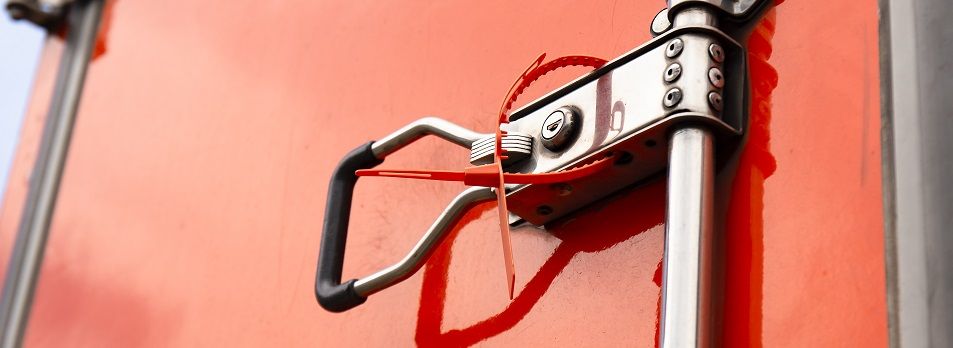
Our range of security seals are widely used throughout the supply chain operations of a range of global retail, logistics and transport companies. Our truck security seals are designed with a number of key features to improve their tamper-evidence and ease of use in the real world. In this post we outline five things to look out for when procuring a security seal... make sure you keep a step ahead of the fraudsters and protect your cargo properly!


So that’s it… the best indicative truck and trailer security seals should have the following key features:
Easy when you know how! 😊 To discuss your needs today, don’t hesitate to send us an email to [email protected] or call us on 01829 760000, and don’t forget to subscribe to our newsletter below, and follow us on LinkedIn for the latest news and updates.
Tote box seals are used in their millions every year across logistics operations in the UK, but plain plug seals simply don’t provide the security and audit trail that is so critical in logistics. Sealing your crates and tote boxes with barcoded seals (or other customised markings) gives you the certainty that sealed items remain free from interference.
Barcoded tote box seals are increasingly used so that operations teams can securely scan crates in and out whilst handling inventory and other items. Our new CrocLoc tote box seal are barcoded as standard, and are available in the UK today. Alternatively, CrocLoc are fully customiseable to suit your particular needs.
Plug seals are available to buy online - or alternatively please don't hesitate to email us for a bespoke quotation based on your needs. We also have a full range of security seals to suit more bespoke requirements you may have.
The Sales Team, Universeal UK.
Export Health Certificates
As part of the post-Brexit trade agreement concluded between the UK and EU, export health certificates (EHC’s) are required for the export of products of animal origin from Great Britain to EU member states. An Export Health Certificate is a document confirming that an export consignment has been checked and certified by an Official Veterinarian (OV) or Certification Support Officer (CSO) to be compliant with relevant sanitary regulations, so that live animals and/or products of animal origin can be exported. Each export consignment must be accompanied with an EHC demonstrating certification.
Security Seals
Instructions issued by the Animal and Plant Health Agency (APHA) recommends sealing each consignment or group of consignments with a security seal, and to record the seal on the corresponding EHC.
Security seals are tamper-proof and uniquely numbered security devices used to provide evidence of chain of custody, or otherwise show evidence of tampering in the event that they are opened whilst in transit.
The APHA Instructions recommends that security seals are used to seal the consignment under the supervision of the certifying officer, who can then record the unique seal number on the EHC. Seal numbers cannot be added or amended on an EHC once signed and stamped by the certifying officer. Border control staff can then use a seal check as an ‘identity check’ without having to open up each individual consignment – although more detailed physical checks will sometimes be undertaken. The type of enclosure onto which the seal is applied will depend on the precise scenario in question, but can range from the sealing of individual cartons and palletised cargo, to the sealing of a road trailer containing multiple consignments of products of animal origin.
Universeal UK offers different types of security seals to suit the type of enclosure being sealed, as below:
1) Pallet and Carton Security

Our StrapSecure Pallet Security seal is a unique security device used to seal pallets and large cartons by protecting the pallet strapping which is commonly used to secure cargo onto pallets or within cardboard packaging.
Each StrapSecure consists of an aluminium cross-plate and Flexigrip cable seal with matching identity / security number, which can be used to the seal the intersection of pallet banding placed around each side of a pallet or large cardboard carton. Once sealed in place, the StrapSecure prevents the pallet strapping from being slid off the pallet and replaced, ensuring that the cargo arrives without being tampered with, or its contents removed / replaced.
Each pallet security seal is uniquely numbered and barcoded, and once the cargo is secured under the supervision of the certifying office, the corresponding security number can be recorded on the Export Health Certificate as evidence of the integrity of the export consignment. As discussed above, this can assist border control officers by enabling them to make a faster ‘identity check’ of a sealed consignment. This can help you as a food business by assisting in the smooth processing of export consignments, helping to deliver fragile, often perishable cargo more quickly and without unnecessary disturbance or delay.
In addition, we also supply a range of security labels and tape for the sealing of cartons. Security carton / box tape is tamper-evident, leaving a void message on the carton upon removal, providing secure chain of custody for even small consignments. Security tape can be supplied in pre-printed, sequentially numbered or custom formats. Sequential numbers can be printed at regular intervals along each reel of security tape, providing security identification numbers which could also be recorded on Export Health Certificates by the certifying officer, subject to approval of relevant agencies.
2) Trailer and Container Security Seals

For the sealing of larger multiple consignments whilst in the transport network, we supply indicative and high-security metal seals. These types of seals provide security to the mode of transport itself, in particular road trailers and rail cars, shipping containers and air cargo containers. Our Globe metal strip seals, Flexigrip 150M cable seals, and Locktainer 2020 bolt seals are all accepted by HMRC / customs officials as an accepted trader seal, meaning that they have been tested and found to be sufficiently tamper-evident across border points. Further information can be found in Government Notice 205
Please contact us to discuss how our security seals can help you in delivering your cargo smoothly and without delay.